



Every style below is uPVC (polyvinyl chloride) with insulated glazing, since that’s what we install. The frame material stays the same across all nine.
How each one opens is what changes, and that decides which style suits a given room.
Guide written by Dundee’s double glazing professionals.
Casement windows: the window style that hinges and swings open
A casement window is hinged at the side and swings outward, usually on a handle or a crank.
Our uPVC casement windows press flat against the window frame when closed, and that flat seal is the main source of their energy efficiency.
Casement is a popular choice across most Scottish housing. uPVC stays low maintenance in a way a timber frame never did, with no repainting cycle to keep up with.
Flush casement windows are the same mechanism with a different profile: the sash sits level with the frame instead of overlapping it, closer to how an original timber window looked.
It’s a popular pick for cottage windows and other period frontages where a standard overlapping casement can look too modern.
Tilt and turn windows, and top-hung
Tilt and turn opens two ways from a single handle, tilting inwards at the top for background ventilation or turning fully inward on a side hinge for cleaning.
Top-hung hinges along the top edge and open outward like a small awning, shedding rain instead of letting it in.
Both are available with double or triple glazing, and both use the same uPVC frames and multi-point locking as the rest of our range.

French windows
French windows are a pair of casements that open outward together with no central post between them, so the whole opening clears at once.
Each sash carries its own large pane of glass instead of being split into smaller lights.
The full-width opening functions as a doorway once both sashes are open. On a wall onto a garden, that’s wider than any single casement can manage.
They suit a dining room or a garden room where you want the wall to open up, letting in natural light as well as air.
They typically cost more to manufacture than a single casement of the same width, since two full sashes and their hardware are doing the work of one opening.
Sliding sash windows: the type of window that doesn’t hinge
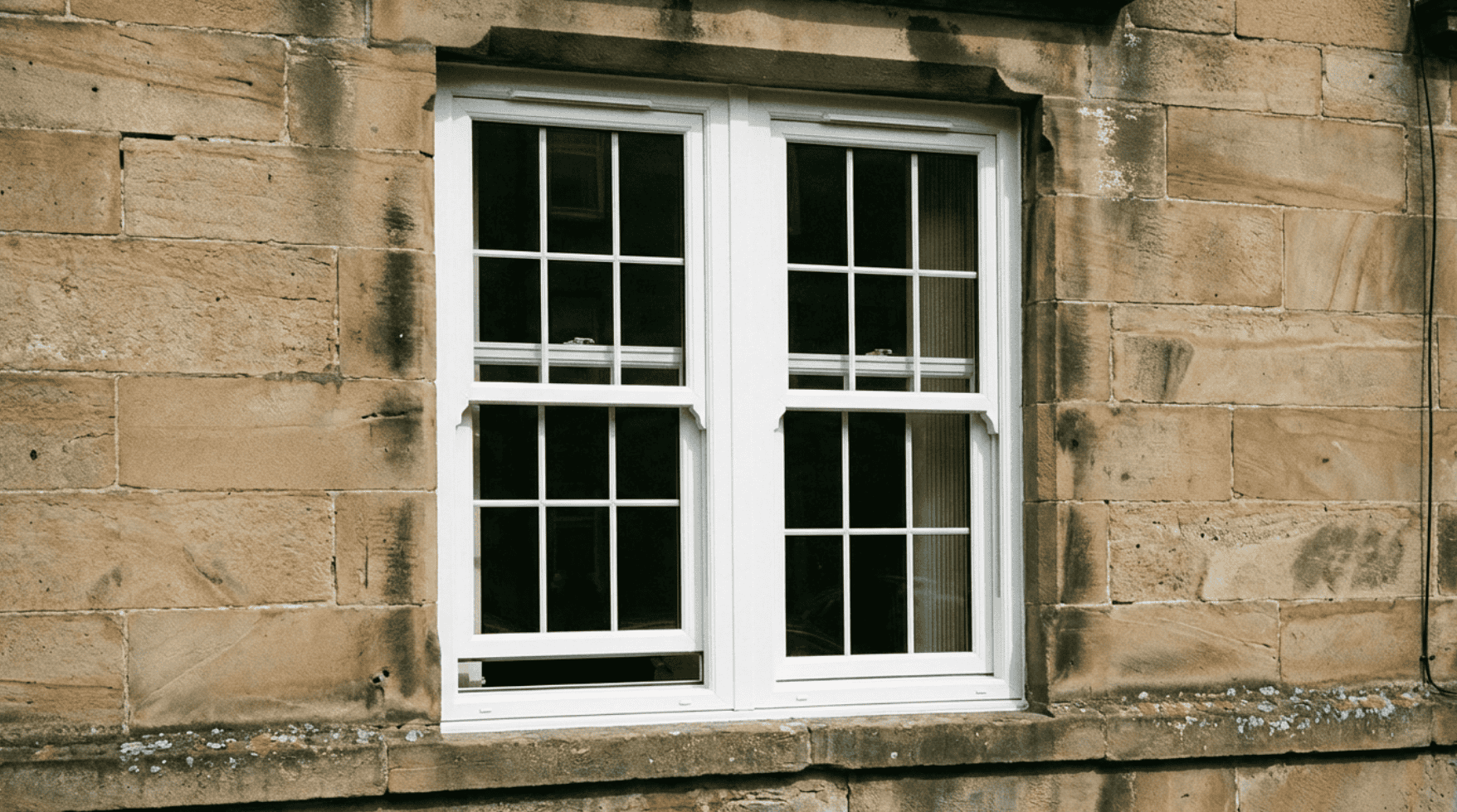
Two sashes move vertically past each other inside the frame, and dropping the top one while raising the bottom gives you airflow in two directions from the same window.
Sash windows are the style tied most closely to Georgian, Victorian, and Edwardian streets across Scotland. Georgian windows in particular are almost always sash, seldom casement.
Our uPVC version uses concealed spring balances to keep the slim sightlines and smooth vertical movement of the original, with the insulation and security brought up to a modern standard.
Bay windows, bow windows, and other shaped window styles
Shape defines bay, bow, and shaped windows, unlike the styles above defined by their opening mechanism.
Each one changes the room itself, and the space or light it adds costs more than a straightforward casement.
Bay windows
A bay window projects outward in three angled sections, usually a fixed central pane flanked by two opening casements.
The angled corners create the extra space inside, room enough for a window seat or a run of plants that a flat window can’t offer.
Square and canted bay configurations both use angled corner posts, not a curve.
Bow windows
A bow window does the same job with a curve instead of angles, usually four to six equal panels forming a smooth arc rather than distinct corners.
That curve suits a Victorian or Edwardian frontage particularly well, though it takes a wider wall opening to fit than a bay does.
Shaped windows
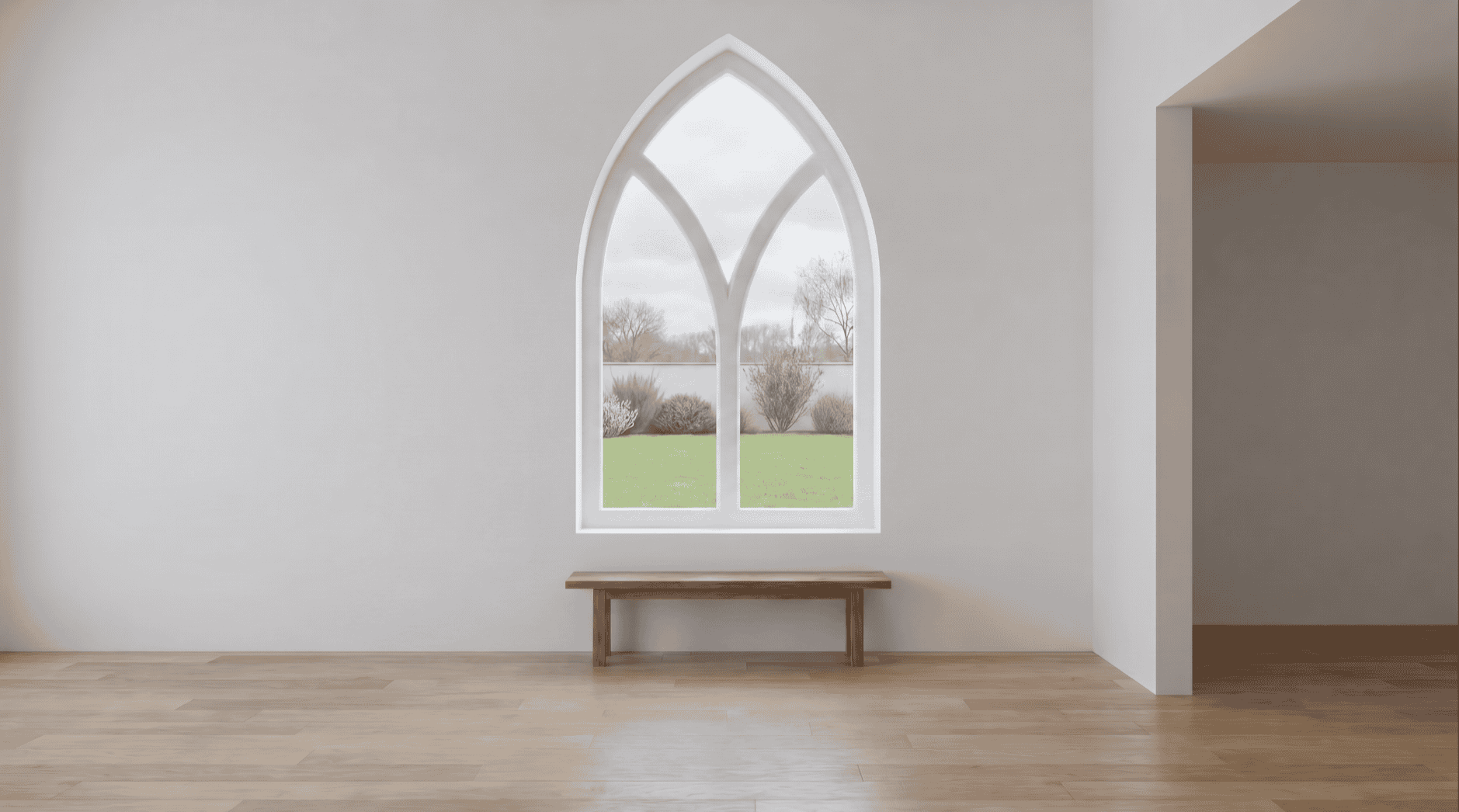
Shaped windows cover anything that isn’t a rectangle: arched tops, full circles, gable-end triangles, or a custom profile built to fill an awkward opening.
Every one is made to measure, since there’s no standard size for an arch that has to match a specific gable.
A stairwell landing or a gable end is the typical spot: a single feature opening where a standard rectangular pane would look wrong. Few properties use a shaped window throughout the whole house.
A circular window in particular is a modern style choice even on an older property, since no period house was originally built with one.
Choosing the right window type for your home
A free survey looks at three things before recommending a style: how the room needs to ventilate, how much space the window can add or take up, and what the planning position is if the property has any listed or conservation status.
Bay or bow windows are the answer if a room needs more usable space. Tilt and turn’s inward tilt handles airflow overnight without leaving a window open wide.
For a Georgian, Victorian, or Edwardian property where the street-facing look matters, sash or flush casement keeps that character intact.
A wall opening onto a garden calls for French windows over any single casement, hinged or not.
A surveyor can check ventilation, space, and planning status against your actual openings in a way no brochure can.
We’ll help you choose the right window frame and style during that visit, before you commit to one.
And we can even go further than that! We even have a guide on blinds to suit your new window style. Our aim is to help you achieve the home of your dreams.
The same guarantee, whichever style you choose
Sliding windows, tilt-and-turn windows, and every double-glazed window in our range carry the same 15-year guarantee, so none of the nine is a safer bet than another on that front.
Types of windows for homes: your questions answered
What are the most common types of windows?
Casement is the most common type of window across Scottish housing, followed by tilt and turn in flats and upper-floor rooms. Sash remains the standard for period properties, and bay or bow windows appear wherever a property was built with (or has room for) a projecting frontage.
What are old style windows called?
Sliding sash is the style most associated with Georgian, Victorian, and Edwardian housing. “Old style” windows usually means the original timber sash version, even though the uPVC replacement replicates the look with modern performance.
Which type of window is best for a home?
A whole house rarely settles on one window style. Casement suits most standard rooms, tilt and turn suits upper floors and easy cleaning, and sash or flush casement suits a period frontage. We go through it room by room during a free survey instead of recommending one style for everything.
What’s the most affordable style of window?
Standard casement is usually the most affordable, since it’s the simplest mechanism to manufacture and fit. Bay, bow, shaped, and French windows all cost more because of the extra frame, glass, or made-to-measure work involved.
Talk to us about the right type of window for your home
Whichever style you’re leaning towards, a free home survey is the way to confirm it suits the room and the window opening.
Whether you’re replacing windows one at a time or the whole house at once, call our Glasgow showroom on 01355 271 223 or request a free quote online.
Every installation carries a 15-year guarantee, and we survey and manufacture every window frame individually rather than working from a standard size. We fit windows and doors together on the same visit if your project covers both.
