


How Sash Windows Work: The Hidden Mechanism – By Double Glazing Experts
What are sash windows?
A traditional sash window compromises of two main components: a top and bottom sash, both of which are fitted within a window frame.
Each sash holds one or more glass panes which are separated by slender wooden bars called muntins. The entire structure sits within a box frame to allow the windows to operate perfectly.
In the classic design, one or both sashes slide vertically. The bottom sash moves upwards and the top one can move downwards, thanks to the control of weights, pulleys, and cords which are hidden inside the window frame. This system is called a ‘box’.
The counterbalance weights connect to each sash using sash cords to help the sash stay exactly where you position them. When you push up the bottom of the sash, the weights inside the frame move downward to counterbalance the sash weight. Likewise, when you pull down the sash, the weights rise to balance the frame.
Modern sash windows now use innovative technology such as spring balances or spiral rods. This performs the exact same function as the but takes but less space in the frame, for a sleeker profile.
The History and Evolution of Sash Windows
Sash windows are iconic to the UK, and have been a part of British architectural history since the late 17th century.
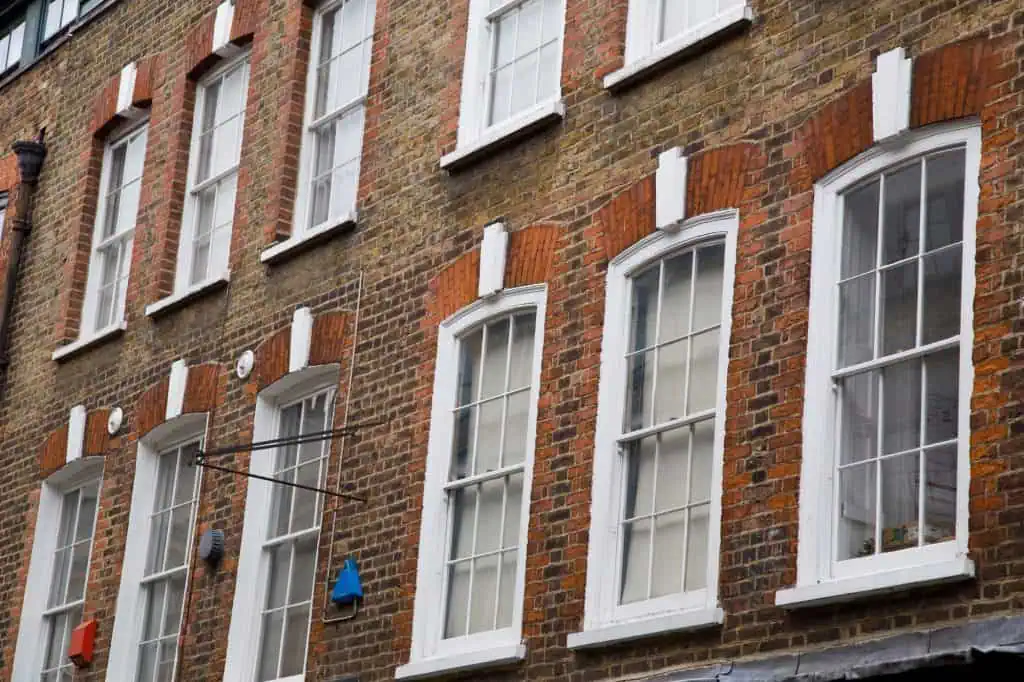
They became particularly popular during the Georgian period, where symmetry and proportion in buildings was sought after. A typically sash window in the Georgian period featured a classic six-over-six panes in each sash. A classic grid pattern that reflected their love for balance and symmetry.
During the Victorian period, while the industrial revolution was taking place, sash windows evolved with advances in glass manufacturing. This allowed for stronger glass, and larger panes. The six-over-size panes transformed into two-over-two, and even one-over-one arrangements. These new arrangements maintained the classic symmetry of sash windows while showing off more impressive expanses of glass and the advances in technology taking place at the time.
Throughout the 20th century, sash windows have faced growing competition from other type of window styles, such as casement windows. However, they have always remained a popular choice due to their classic and timeless appeal.
Types of Sash Windows
Sash windows can come in a variety of styles that are sure to complement any home.
Box Sash Windows
Box sash windows represent the original sash design found during the Georgian and Victorian era. The ‘box’ refers to the weights, pulleys, and cords, that are hiding inside the window frame.
Box sash windows are often heavier and thicker than modern sash frames. This makes them more suited for larger window openings.
Box sash timber windows can sometimes suffer difficulties in the mechanism over the years as weathering can affect the cord inside.
Single-Hung Sash Windows
With single-hung sash windows, the window still has two sashes. However, only the bottom sash moves while the top sash stays fitted in place.
This design is offers simple operation whilst maintaining a classic sash appearance.
Double-Hung Sash Windows
Double-hung sash windows allows both the bottom and top sash to slide.
As a versatile, sliding sash window you gain maximum flexibility for ventilation, as warm air can escape through the top while fresh air flows in from the bottom.
Modern uPVC Sash Windows
Sash windows aren’t limited to timber sash windows anymore. Modern window designs also include uPVC options available.
uPVC provides better thermal performance and less maintenance, all while mimicking the appearance of traditional wooden sash windows.
Instead of the traditional weight and pulley system, they typically use spring balances, providing a smooth and easy operation.
Modern uPVC windows come double glazed which offers fantastic insulation for your home. For more ways to insulate your home without breaking bank, read our article to prepared for winter.
Benefits of Window Sash Styles
Here are some of the reasons why you should consider sash window designs for a home transformation.
Superior Ventilation Control
Double hung sash designs give you the ultimate control over ventilation.
By opening both the top and bottom sashes at the same time, you create two separate openings that encourage natural airflow.
Heat rises, so you can easily get rid of damp air or steam, while letting cooler air to enter from outside. This can thoroughly ventilate your home without the need for fans or air conditioning.
Window Frames with Timeless Appeal
Sash windows offer a a traditional elegance that works beautifully with many architectural styles.
With their rich history, they can add genuine character and charm to enhance any property. And when cleaned, they look stunning in the sun.
Space Efficiency
Unlike casement windows swing outward, sash windows slide neatly within their frame.
This makes them perfect for properties where space comes at a premium, and works especially well in terraced houses and properties close to pathways.
Security Benefits
Modern sash windows come with advanced security features that can protect your home while keeping their traditional appearance.
Some of these features include robust locking mechanisms, reinforced frames, and strengthened glass.
Contact Us for a Wide Selection of Double Glazed Sash Windows
Questions about sash windows? The Advanced Group is here to help you.
We offer a huge range of uPVC sash windows designed to enhance your home while increasing your energy efficiency.
Our team is always more than happy to guide you through an option which is perfect for your property, as well as discuss the benefits of investing in double glazing.
For more information on our range of window styles, contact our friendly team today on 0141 473 4141.
