



A west-facing gable on the Ayrshire coast sees conditions that a sheltered suburban semi will never face.
Salt-laden wind drives rain into the frame joints, temperature swings hard between cold damp winters and occasional bright summers, and window frames that would last thirty years in a quiet cul-de-sac can show visible deterioration within a decade.
Windows designed for an exposed location need to handle coastal weather, resist salt, shed wind-driven rain, and hold their thermal performance in positions where the wind doesn’t let up.
The Advanced Group supplies uPVC windows to homeowners across Scotland’s coastal areas, exposed hillsides, and west coast communities. Our windows are specified for Scottish conditions, with glazing and frame options built around the unique challenges of high-exposure positions.
For more information on our expert windows, reach out to our team today.
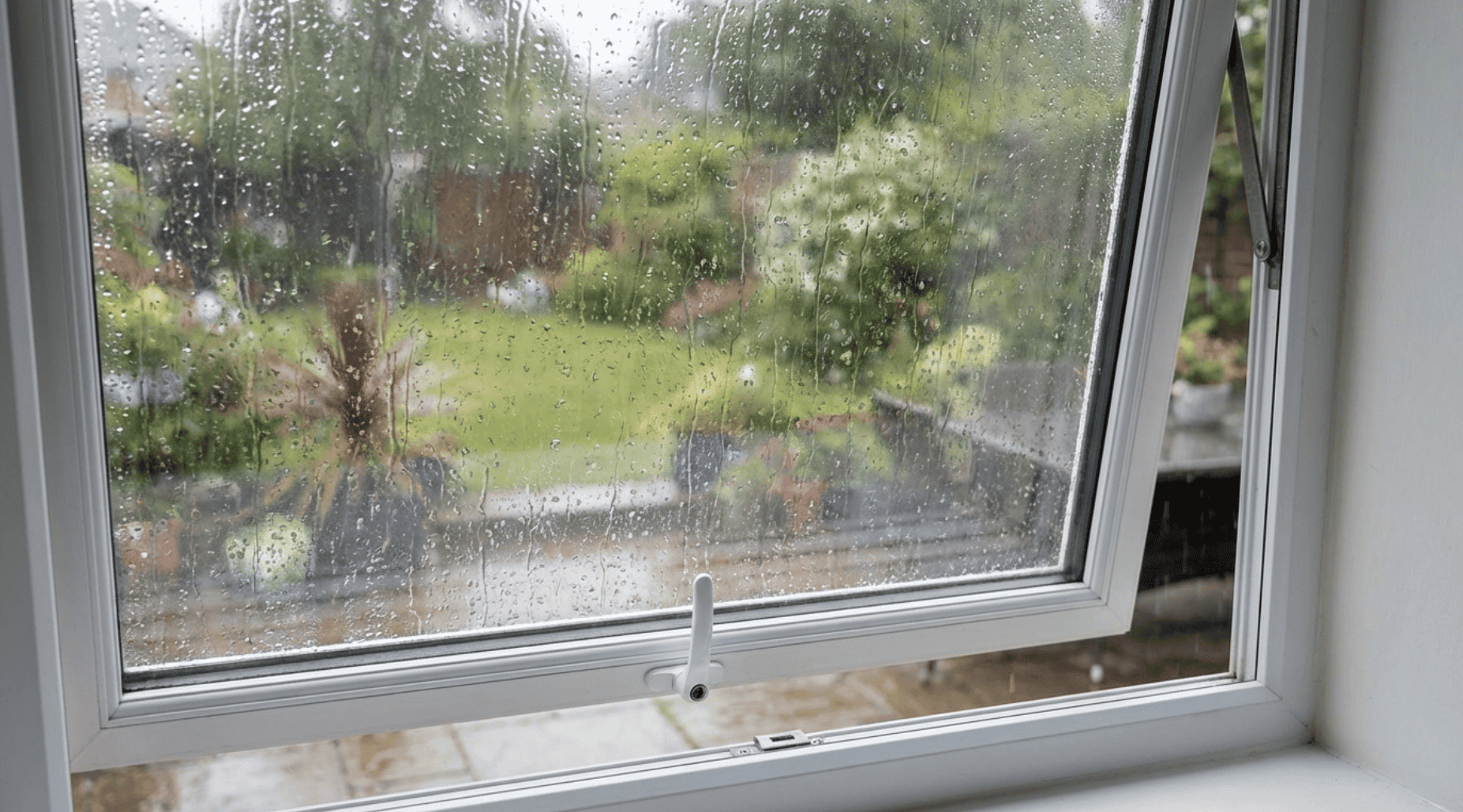
What makes a location high-exposure?
High-exposure doesn’t only mean seaside.
Plenty of Scottish properties sit in positions that put windows under sustained stress without being within sight of the water.
West coast properties, island homes, and elevated rural properties all experience conditions that coastal homeowners recognise: persistent rainfall, wind-driven rain, salt air carried inland from the sea, and temperature extremes that cycle hard through the seasons.
North-facing elevations get limited sun to dry out moisture between rain events. Hillside properties in Argyll, Ayrshire, or across the Central Belt experience wind speeds that simply don’t occur in low-lying urban areas.
Exposed coastal locations add salt to everything.
Salty air deposits on window frames, in frame joints, and around seals over years of exposure, and the effect on poorly specified materials is gradual but cumulative.
Understanding which category your property falls into helps when selecting window frames and glazing.
The window frame material, glass specification, and installation detail all need to match the conditions your windows will face for the next decade and beyond.
Why uPVC is the right choice for coastal and exposed locations
Frame material matters more in an exposed location than anywhere else.
The challenges of coastal living put window materials under a level of stress that sheltered suburban conditions don’t come close to replicating.
uPVC window frames have a clear advantage in exposed positions.
uPVC doesn’t corrode, rust, or oxidise regardless of exposure to salt air, moisture from wind-driven rain, or the salt deposits that accumulate on coastal properties over time.
For low maintenance, resistant windows, uPVC is the perfect pick.
Corrosion and salt resistance
Standard window frames in coastal areas face a specific problem. Salt deposits work into joints and seals over years of exposure.
For materials that corrode or oxidise, this accelerates deterioration noticeably.
uPVC is resistant to salt at any level of exposure.
There’s no protective coating that can fail over time, because the corrosion resistance is a property of the material rather than a surface treatment applied during manufacture.
Some timber frame options for coastal properties rely on surface coatings to achieve their resistance to salt. When those coatings are damaged or begin to fail, the underlying material is exposed.
Our uPVC frames need no such protection, and coastal installations of our windows that are over twenty years old look and perform as they should.
Wind-driven rain and weather seals
High-exposure homes face a glazing challenge that sheltered properties rarely encounter.
Wind-driven rain arrives at angles that push against seals and frames rather than running harmlessly off the glass.
Our uPVC windows are fitted with compression weather seals around every edge.
The multi-point locking hardware pulls the frame tight against the seal when the window is closed, and that compression holds even in high winds.
UV stability and colour retention
Scotland’s west coast and island locations get more sun than the reputation suggests, particularly in summer.
Extended UV exposure affects window frame materials differently depending on their composition and how they were manufactured.
Standard uPVC can yellow or chalk over time under prolonged UV exposure.
But our window profiles use UV-stabilised compounds throughout that resist this discolouration, keeping the frames looking right without repainting or recoating at any point in the window’s lifespan.
For coastal homes where the windows are visible from the road or the water, the aesthetic appeal of the frames matters beyond pure function.
Thermal performance in exposed positions
Exposed locations lose heat faster than sheltered ones.
Prevailing winds draw heat away from the building envelope, and windows in coastal environments face higher demands on their thermal insulation than equivalent windows on sheltered south-facing elevations.
Our Advanced 70+ uPVC profile can achieve U-values as low as 0.8 W/m²K, measured against the thermal performance standard used in UK building regulations.
A window at that performance level reduces heat loss substantially compared to an older double-glazed unit, keeping your home warm in positions where the wind load is constant.
For exposed homes where heating bills already run high because of the location, the energy efficiency of your windows and doors has a direct effect on running costs every winter.
Double glazing vs triple glazing for exposed coastal homes
Choosing the right glazing for an exposed property is more nuanced than it looks, and it’s worth understanding what each option actually delivers in coastal conditions.
During your free site survey, we can consult with you to guide you on weather your home and location is best suited to double glazing or the extra protection from our triple glazing range. We can also guide you on the benefits of our glazing products with argon filled gaps.
Our surveyors always listen to your needs, concerns, and budget to recommend the right glazing for your exposure level and lifestyle.
All of our quotes are completed free of charge with no obligation to commit.
Getting installation right for coastal windows
Window installation in coastal areas involves details that don’t arise in sheltered suburban properties, and they’re worth understanding before choosing new windows for your home.
The gap between the window frame and the surrounding masonry is sealed during installation with expanding foam and exterior mastic.
In coastal conditions, the quality of that seal matters because wind-driven rain will probe any gap.
Our installers are experienced with exposed locations throughout Scotland.
They seal every gap correctly, apply the appropriate fixing schedule for wind loads in the area, and leave no route for moisture between the frame and the masonry.
Sash windows on older coastal properties present a particular installation consideration.
Where an existing sash window opening has a timber sub-frame, we assess its condition before installation to confirm the opening is ready for the new uPVC unit.
Trickle vents are fitted into the frame head as standard.
In an exposed home where windows stay closed during bad weather for extended periods, ventilation without opening becomes more important for managing indoor air quality and preventing condensation.
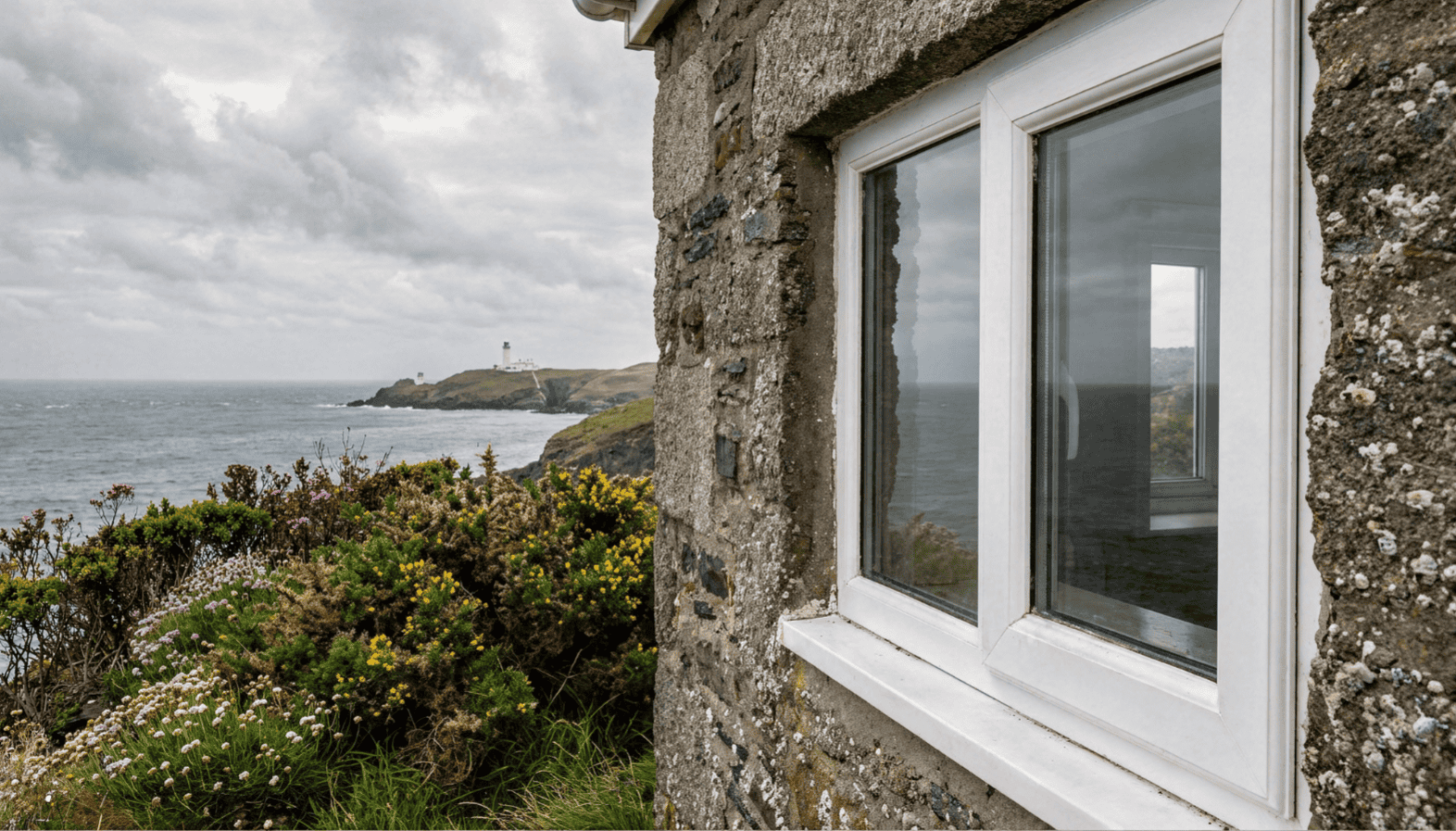
Looking after uPVC windows in coastal areas
uPVC requires less maintenance than timber in any location.
In a coastal environment, that advantage is huge. Salt deposits that accelerate deterioration in other frame materials have no equivalent effect on uPVC.
Keep them clean
The main task is keeping the frames and seals clean.
Wash with soapy water and then rinse windows with fresh water every few months to remove salt build-up before it affects the seals. Most coastal homeowners build this into their regular routine after windy spells.
Inspect the seals
The rubber seals should be inspected once a year.
On an exposed coastal property, seals can harden faster than on sheltered homes because of temperature cycling and UV exposure.
Replacing a seal when it begins to lose compression costs far less than addressing the water ingress that comes after a failed seal.
Long-lasting windows with a long-lasting guarantee
uPVC frames won’t need painting.
A well-specified uPVC window in an exposed position looks the same at year fifteen as it did on installation day.
Our 15-year guarantee covers the frame, the sealed glass unit, hardware, and workmanship across that full period.
For guidance specific to your property’s exposure level and location, our surveyors can provide expert advice during the free home visit.
Why choose The Advanced Group for exposed-location windows
Experience on coastal locations
We’ve been installing windows throughout Scotland since 1988, and a good proportion of our work has always been in exposed and coastal positions.
From west coast properties, island homes reached by ferry, and hillside locations where the wind doesn’t stop, we’ve covered them all.
15 year guarantees
Every installation comes with a 15-year guarantee covering the sealed glass unit, the frames, hardware, and workmanship. We cover the full lifespan of the window, not just the first year or two.
Huge selection of window frames
Our range of uPVC windows covers casement, tilt-and-turn, sash, bay, bow, and more!
Our team will always guide you through the best option for your specific opening, exposure level, and property type.
Providing window and doors across Scotland
We cover Glasgow, Edinburgh, and the full Central Belt as standard, with installations throughout Scotland, including coastal regions, island properties, and remote highland locations.
Wherever you are in Scotland, we aim to supply you with the best quality windows and doors on the market.
Call us today to confirm coverage for your area.
Best windows for exposed locations: your questions answered
What are the best windows for exposed areas?
uPVC windows with double or triple glazing are the best option for most exposed and coastal locations in Scotland. The frame doesn’t corrode or rust, the seals hold in high winds, and there’s no repainting or recoating required over the life of the window.
Does uPVC corrode or degrade in salt air?
uPVC does not corrode. The material is chemically inert and resistant to salt at any level of exposure, including marine environment conditions close to open water. There’s no surface coating to maintain and nothing in the frame that can rust or oxidise.
How do I protect my windows from salt and coastal weather?
The main task is keeping the frames and seals clean of salt deposits. Protect your windows from salt build-up by washing with soapy water and then rinsing with fresh water every two to three months, particularly after periods of strong onshore wind.
Will new windows help with wind noise in an exposed home?
Yes. Wind noise in exposed homes comes partly from glass transmitting vibration and partly from draughts around poorly sealed or deteriorated frames. New uPVC windows address both, and the improvement in a draughty older house is often noticeable from the first night after installation.
What maintenance do uPVC windows need in coastal areas?
Less than most homeowners expect. Clean the frames with soapy water and a fresh water rinse every few months, inspect the seals once a year, and lubricate the hardware annually. No painting, no recoating, no treatment required at any stage.
Get a free quote for windows in your exposed location
If you are located in an exposed location such as up a hill, close to a coastal environment, or in a windy area, The Advanced Group’s high-quality uPVC windows is perfect for your property.
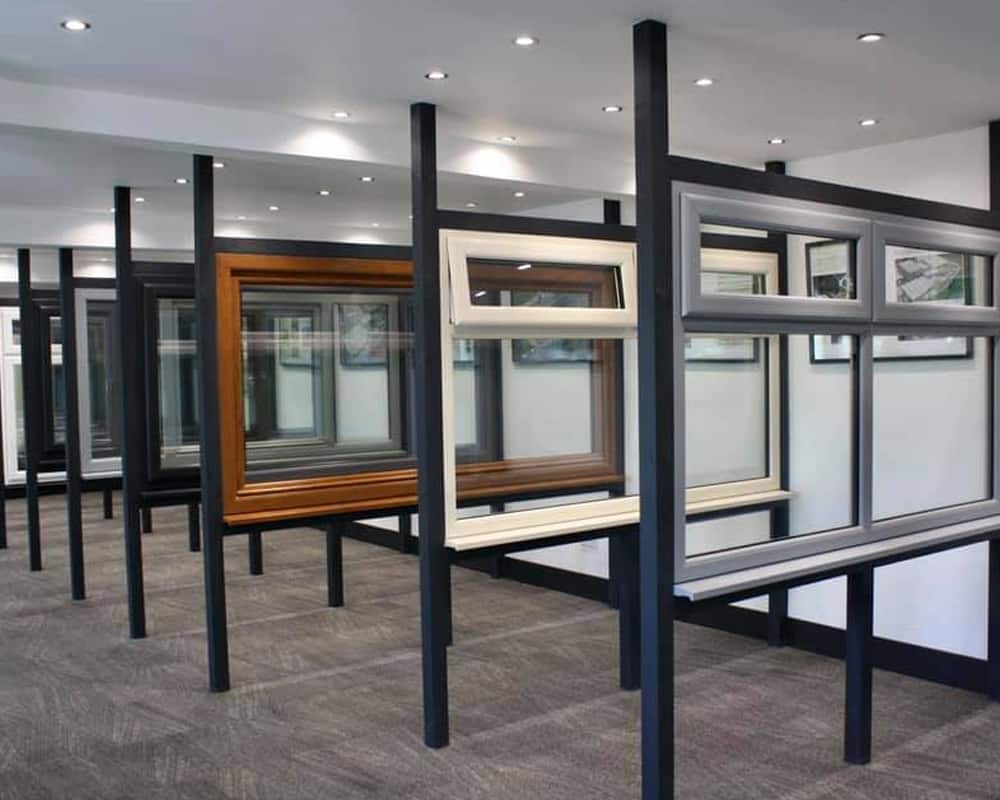
Come and visit our Glasgow showroom to see for yourself or book your free home survey where our experts will assess the specific conditions your property faces, and recommend the right windows and doors for your location before you commit.
For more on how our windows perform in high-exposure locations, contact our friendly team today on 0800 050 2502.
