


What is a gas fill? – By Edinburgh glazing professionals
A gas fill refers to an insulating gas sealed inside the cavity of an insulated glass unit (IGU).
In a double-glazed window, each window pane is separated from its neighbour by a sealed spacer, with the space between the panes filled with either air or an inert gas, typically argon.
Triple-glazed units have two separate cavities, each sealed and filled with argon gas independently.
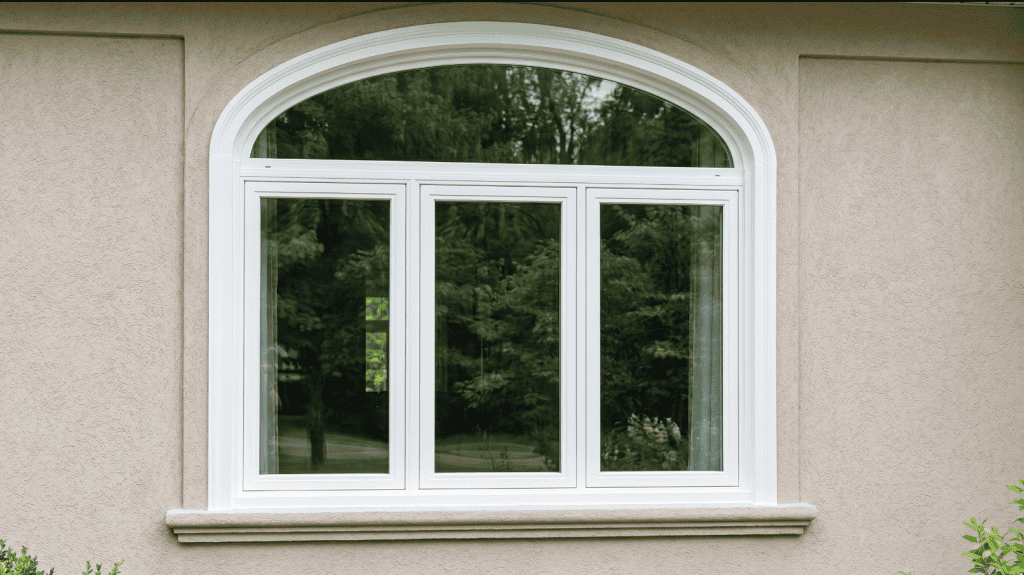
The window gas choice isn’t visible from outside, but it determines how well the unit can insulate between the panes.
The role of gas fills is to slow down the movement of heat between the inner and outer panes.
Air does this to some extent, but argon gas does it much better.
Filling the space with argon instead of air reduces the rate at which heat crosses the cavity, and the effect of reducing that transfer of heat is a warmer inner pane, less condensation, and a lower U-value overall.
Does argon gas change the window’s appearance?
Argon is colourless, odourless, non-reactive, and non-toxic.
It is an inert gas that doesn’t interact with the glass or the spacer seal, doesn’t affect visible light transmission, and presents no risk in indoor and outdoor environments.
The gas windows and doors on today’s market are identical in appearance to air-filled units.
What’s different is their thermal performance.
How argon gas reduces heat loss
Heat moves across the gap between two glass panes by three mechanisms: conduction (direct transfer through the gas molecules), convection (warm gas circulating and carrying heat from the warm inner pane to the cooler outer pane), and radiation.
Gas fills address the first two.
Being denser than air, argon also convects more slowly, which further limits heat movement across the cavity.
The combined effect of lower thermal conductivity and reduced convection means argon gas filled units provide better thermal insulation than air-filled units, and are more effective at reducing the transfer of heat across the cavity.
A warmer inner pane also keeps the glass surface above the dewpoint in cold weather, which is what reduces condensation on the inside face of the glass.
Enhanced insulation properties at the glass surface matter not just for comfort but for the condition of window frames, sills, and the surrounding wall over time.
Our double-glazed windows achieve a U-value of 1.4 W/m²K with argon gas fills.
Our triple-glazed windows, where two cavities are filled with argon gas rather than one, reach 0.8 W/m²K!
Gas fills and Low-E coatings
Gas fills address conductive and convective heat movement across the cavity.
Low-E (low-emissivity) coatings on the glass surface tackle a different mechanism: radiant heat transfer.
A Low-E coating reflects long-wave infrared radiation back into the room in cold weather and can reduce solar heat gain when the sun is at its strongest.
The solar heat gain coefficient (g-value) of a glazing unit measures how much of the sun’s energy passes through the glass.
During a hot summer, glazing with a lower g-value reduces overheating in south-facing rooms.
Low-E coatings reduce this, and gas fills work alongside them: the coating addresses radiation, the gas addresses conduction and convection.
Neither alone achieves what both together can.
The combination of argon gas fills and Low-E coatings is what makes it possible to improve their thermal performance enough to meet modern energy standards, and it’s standard window technology across the UK market.
Gas fills also contribute a small amount of noise reduction beyond their thermal role.
Argon is denser than air, and denser gas transmits sound vibrations less efficiently.
The effect is modest compared to what acoustic glazing achieves, but it’s a secondary benefit that comes without extra cost in a standard argon gas filled unit.
Does gas fill concentration fall over time?
All sealed units allow a small amount of gas to pass through the spacer seal over time.
The typical leakage rate for a well-manufactured unit is around 1% of gas concentration per year.
Seal quality has improved substantially over the decades, and modern units are manufactured to EN 1279 standards for gas fill retention.
The more common failure mode is seal breakdown that allows moisture into the cavity, visible as fogging or condensation between the panes.
When this happens, the window has lost its insulation properties regardless of gas concentration.
In most cases the remedy is sealed unit replacement rather than a full window installation, and the argon gas is recharged as part of the new unit rather than being refilled into the existing one.
Greenhouse gas emissions from argon leakage aren’t a concern.
Argon is not a greenhouse gas, and its release into the atmosphere is environmentally neutral.
What gas fills mean for heating and cooling energy use
The thermal performance of argon gas windows translates directly into reduced energy consumption over the life of the installation.
In Scotland, heating demand drives most of the energy costs in a home, and reducing heat loss through glazing cuts heating and cooling energy use across every room with external windows.
Homes that move from older air-filled or single-glazed units to argon gas filled double or triple glazing consistently reduce heating and cooling demand and see lower energy bills as a result.
The thermal benefit also changes how rooms feel.
Reduce energy losses through glazing and the area near the window becomes less draughty, which makes the room more comfortable without increasing room temperature.
Managing heat gain and loss through the glass effectively means less reliance on heating to compensate for cold surfaces, which is where much of the energy saving comes from in practice.
Insulation and energy efficiency from gas fills extend to warmer seasons too.
Better glazing moderates internal temperatures during warm periods by improving the thermal envelope of the building rather than simply cutting solar gain.
For homeowners looking to reduce heating and cooling energy use year-round, argon gas filled double and triple-glazed windows are the baseline, not an upgrade.
Gas-filled windows also sit alongside loft and wall insulation as part of a home’s broader building insulation strategy.
Efficient energy use across a Scottish property depends on the thermal envelope working together, and glazing is one of the larger heat-loss surfaces in any house.
Frequently asked questions
Are gas-filled windows worth it?
For any new double or triple glazing, yes. The performance gap between argon gas filled units and air-filled units at equivalent glass specifications is real. The benefits of gas-filled windows over air-filled are built into the product, not sold as an extra.
How long does argon gas last in double-glazed windows?
With a well-manufactured sealed unit, the gas concentration stays above performance thresholds for the expected 20-25-year life of the glazing. The leakage rate is slow, and the sealed unit standard that UK window manufacturers follow is designed around long-term retention. The indicator to watch is internal fogging between the panes, which points to seal failure rather than gas loss alone. At that point the sealed unit needs replacing regardless of how much argon remains.
Talk to our team about our innovative gas-filled windows
We install argon gas filled double-glazed windows and triple-glazed windows across the whole of Scotland, with Low-E coatings as standard on both ranges.
Every installation comes with a 15-year guarantee and 0% finance options. And all our uPVC windows are fitted by our own experienced fitters for a trustworthy installation.
Whether you are looking towards standard glazing or specialist glazing solutions, we can help.
If you’d like to know whether your current windows are performing as they should, or you’re comparing double and triple glazing options, call us on 01355 271 223 (Glasgow) or 0131 370 0444 (Edinburgh), or book your free home survey today.
