


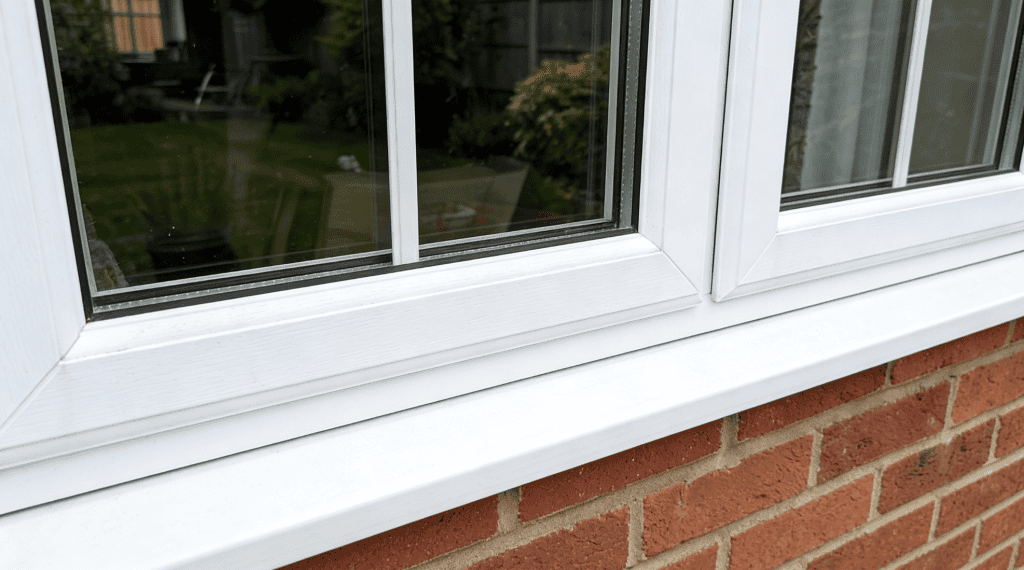
Both safety glass types are commonly used for added protection for double glazing. They can be used on a range of window and door styles, including sliding sash windows, tilt and turn windows, patio doors, and more!
What is Toughened Glass?
Toughened glass doesn’t mean it has added layers of thickness.
Toughened glass, also known as tempered glass, is a type of safety glass is heated during production. This processing gives it extra strength when compared to ordinary annealed glass.
The manufacturing involves heating standard glass to a high temperature of around 620°C and then rapidly cooled using high-pressure air jets. This creates a compressed outer surface and a tensioned inner core, resulting in glass that’s roughly five times stronger than standard varieties.
One of the most notable features of toughened glass is how it behaves when broken.
Rather than creating dangerous, sharp shards, it disintegrates into small, granular chunks. This means it poses much less risk of serious injury.
What is Laminated Glass?
Laminated glass is made of two sheets (or more) of glass permanently bonded together with a plastic interlayer, typically made from polyvinyl butyral (PVB).
If the glass breaks, this interlayer holds everything in place, preventing shattered pieces from falling out of the pane. This prevents scattering to reduce the risk of injury.
Key Differences Between Toughened and Laminated Glass
Strength and Safety
Toughened glass offers about four to five times the strength of standard annealed glass. Highly resistant to impact and temperature changes. The only trade-off comes at its breaking point when the entire pane shatters into small cubes.
Laminated glass won’t match the impact resistance of toughened glass. But it does provide better overall safety because it stays intact when broken.
Sound and UV Protection
For homes near busy roads or in urban areas, laminated glass works best. This is because thanks to its PVB interlayer, which effectively absorbs sound waves to limit noise transmission.
PVB also provides great UV protection, blocking as much as 99% of harmful ultraviolet rays that would otherwise fade your furniture, carpets, and curtains over time.
Toughened glass doesn’t naturally provide the same level of acoustic or UV protection.

Applications of Glass Types
Toughened glass works best in several situations.
It’s particularly good for internal glass doors and partitions throughout your home. This type of glass can also be good for shower screens where humidity and temperature is constantly changings. Other common uses include glass balustrades, balconies, staircases, and even table tops, where durability and protection against breakage matters.
Laminated glass shines in different contexts.
External windows and doors can be great applications for windows and doors which need a little extra sound proofing, along with added security. It’s also the standard choice for roof glazing and skylights because of its ability to stay intact if broken.
The Ultimate Safety Glass
You don’t actually need to choose between toughened and laminated glass. That’s because you can get both in one.
Laminated toughened glass brings together the best qualities of each type. The sheer strength from the tempering process, and a PVB interlayer between glass sheets that keeps it together in one piece, even during breakage.
This is a premium double glazing option.
But for homes looking for that extra security, protection, and strength, it can be well worth the investment.
Making the Right Choice for Your Glazing Needs
When weighing up toughened glass versus laminated glass for your home, consider what matters most for you.
If you are unsure what is best for your household, The Advanced group team are always open for a friendly, honest chat. We have decades of experience of supplying double glazed units across Scotland, and are always more than happy to help homeowners feel secure in their decision.
For personalised advice, contact our friendly team today on 0800 050 2502.
