



The short and easy answer is that a panel door is any door built with a frame and one or more panels set into it, rather than being made from a single flat sheet of material.
It’s the most common door style in the UK by a long way, and chances are the doors in your home right now are panel doors of one kind or another.
Here’s a fuller explanation of what panel doors are, how they’re constructed, and how the different types compare when you’re choosing a new front door or replacing your interior doors or external doors.
How a panel door is constructed – By double glazed panel door experts
A panel door is made up of several separate components that fit together within a frame.
The frame itself consists of two vertical pieces (called stiles) running down each side, and horizontal pieces (called rails) running across the top, bottom, and at intervals in between. The panels sit inside this framework, held in place by the rails and stiles.
The panels come in three main types. They can be raised panels (sitting slightly proud of the frame), recessed panels (sitting slightly behind the frame), or flat panels (sitting flush with the frame).
The number of panels can vary, depending on the style the homeowner wants to achieve. And it is this construction method that gives panel doors their distinctive look. When compared to a plain flat door, panels add visual interest and a unique pattern.
Historically, panel doors are more practical than traditional solid wood doors. By building the door from several pieces rather than one solid slab, the door is less likely to warp as the materials expand and contract with changes in temperature and humidity.
Although modern uPVC and composite doors are engineered to resist warping and movement, panel detailing is still popular because of the style it adds. You can even paint your panel doors later on to give them a refresh of colour.
Panel door styles for internal doors and exterior doors
The number and arrangement of panels is what defines the style of the door. Here are the most popular panel doors to suit any home style.
2 panel doors
A two-panel door has a larger panel on the bottom and a smaller one on top, separated by a single horizontal rail across the middle.
Clean and simple, it works well in both traditional and modern homes. You’ll see this style a lot on Victorian and Edwardian properties.
4 panel doors
The classic four-panel door has two smaller panels at the top and two taller panels at the bottom.
This is probably the most recognisable panel door style in the UK and has been a standard for internal doors in British homes for over a century. It suits period properties particularly well, but it’s versatile enough to work in most home settings.
6 panel doors
Six-panel doors add another pair of panels, creating a more detailed, traditional look. They help give a home’s extra character and charm, adding more visual depth to the overall appearance.
Single-panel doors
A single-panel door has one large panel set into the frame, giving it a simpler, more contemporary look. You’ll see this style on a lot of modern composite front doors.
Glass panel doors
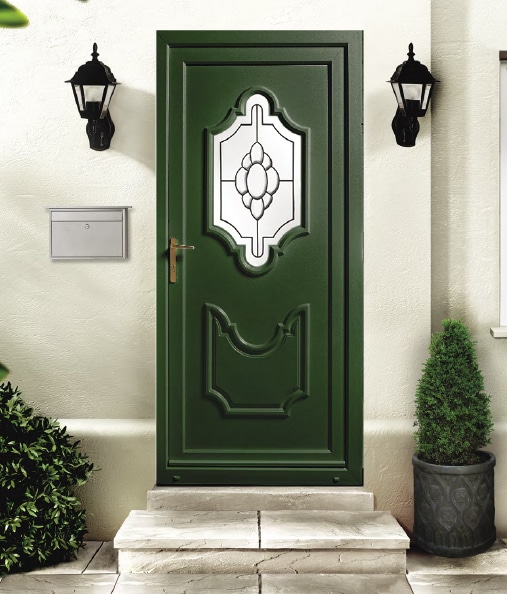
Many panel doors replace one or more of the solid panels with glass.
This is especially common on front doors, where a glazed panel at the top lets natural light into the hallway without compromising privacy or security at the lower half of the door.
The glass can be clear, frosted, patterned, or decorative, depending on the look you’re after and how much light you want shining through.
Panel doors vs flush doors
A flush door is the opposite of a panel door in terms of appearance.
Where a panel door has a visible framework and raised or recessed panels, a flush door has a completely flat, smooth surface on both sides.
Inside, flush doors are typically hollow or filled with a lightweight core, which makes them lighter and less expensive than solid panel doors. Although they are completely fine for internal use, they don’t offer much insulation, soundproofing, or durability unless specifically designed for external usage.
Typically, when choosing external doors, you will need something with more substance to handle the weather, provide security, and insulate your home.
That’s where panel doors, particularly composite and uPVC panel doors, come in.
What are external panel doors made from?
When it comes to front doors and back doors, the material matters just as much as the style. The Advanced Group specialises in two main types of external doors.
Composite panel doors
Composite doors use the panel door design but with modern materials.
The core is typically made from insulating foam surrounded by a solid timber subframe, with a GRP (glass reinforced plastic) skin on the outside that is expertly moulded to replicated the look of a traditional woodgrain panel door.
The end result?
A door that has all the visual character of a timber panel door but without all the maintenance, increased security, better insulation, and protection against the weather.
Security is built in too.
Most composite panel doors come with multi-point locking systems that secure the door at multiple points around the frame. Properly installing a front door makes sure that they’re extremely difficult to force open.
For front doors, composite is the most popular choice in the UK right now, and it’s easy to see why. You get the traditional panel door look with modern performance.
uPVC panel doors
uPVC panel doors have a welded plastic frame with panels that can be solid or glazed.
They’re lighter than composite doors, more affordable, and very low maintenance. A simple wipe down with soapy water is all they need to stay looking clean.
Great for back doors and side entrances, and they work perfectly well as front doors too, particularly if budget is the main consideration.
The panel designs available in uPVC are more limited than composite, but you can still get a range of styles including two-panel, four-panel, and half-glazed options in various colours.
The only thing to be aware of for front uPVC panel doors is that they don’t have the same weight and solidity as composites. They feel lighter when you close them, and the panels can sometimes look a bit flat compared to the deeper moulding on a composite door.
For some homeowners, that doesn’t matter at all.
For others, the appearance, feel, and extra insulation and security of composite doors make it a clear winner,
What about internal panel doors?
Panel doors aren’t just for the front of the house.
Internal panel doors are the standard throughout most Scottish homes, and if you’re renovating or redecorating, replacing the internal doors is one of the simplest ways to freshen up the whole house.
The most common internal panel door in UK homes is the four-panel design, but two-panel and six-panel options are widely available too.
If you’re replacing all the internal doors at once, keeping the same panel style throughout the house gives a cohesive look.
Thinking about a new panel door for your home?
If you are considering replacing your exterior door with a new uPVC or composite door, you’ve come to the right place.
The Advanced Group is proud to have one of the largest collections of door styles in the whole of Scotland, and we are pleased to offer our expert fittings across the whole country. With decades of trusted experience and a 15 year guarantee on our services, you are in more than capable hands.
Contact our professional team today to learn more about our services or organise your free, no-obligations quote. We are always happy to guide new clients through their hundreds of options for new windows and doors.
