


Casement windows – Guide by double glazing experts in Dundee
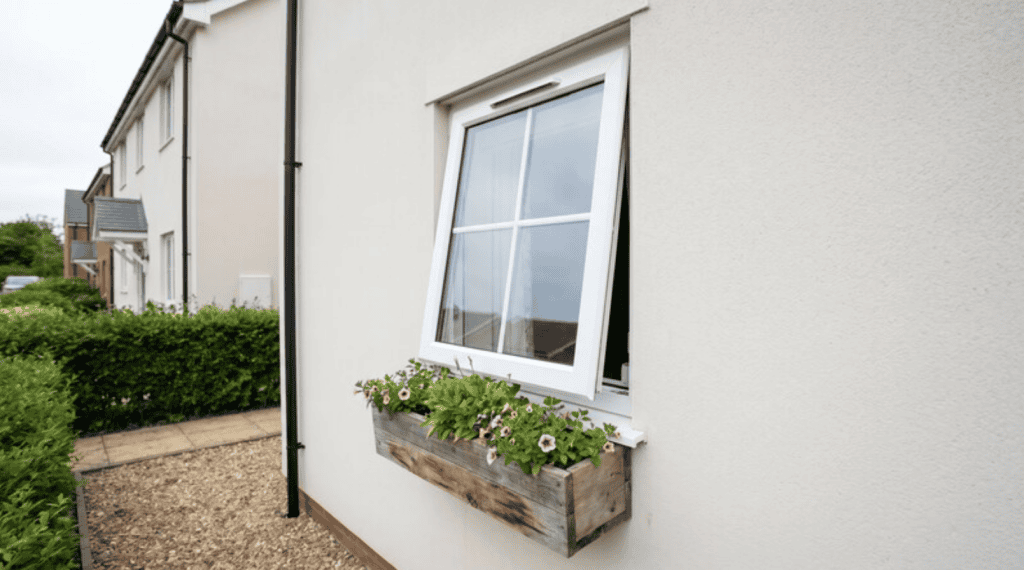
A casement window is hinged down one side. It swings outward when you open it, usually with a simple handle or a crank.
When it’s shut, the sash presses flat against the frame for a tight seal.
That tight seal is part of why casement windows perform so well for both insulation and weathertightness.
Why casement is the default choice
Casement is the most common window type in the UK. It suits almost any room and any property style, from a Victorian tenement to a new-build bungalow.
The sash swings outward rather than into the room. The outward swing means it doesn’t clash with blinds, worktops, or furniture positioned close to the window.
Casement is a practical choice for kitchens and bathrooms in particular.
We also fit uPVC casement windows in a flush style, a variant where the sash sits flush with the frame instead of overlapping it. The look is closer to a traditional timber window.
Flush casements are a popular choice on period properties, where a standard overlapping casement can feel slightly out of place.
Tilt and turn windows
A tilt and turn window opens two different ways from the same handle.
Turn it one way and the top of the sash tilts inward, creating a narrow gap for background ventilation.
Turn it further and the whole sash swings inward on a side hinge. The full inward swing gives you a wide opening for airflow or cleaning.
What the dual opening actually gives you
No other window opening type here combines a tilt position with a full inward turn from one handle. The tilt position suits a mild day when you just want background airflow.
The turn position lets you clean the outside glass safely from inside the room.
Being able to clean from inside is a real advantage on upper floors, where cleaning a casement window from outside isn’t always practical.
The single handle mechanism allows the window to tilt or turn without needing separate hardware for each.
Tilt and turn has been standard across much of mainland Europe for decades. It’s become a familiar sight in Scottish flats and new-build developments too.
Top-hung windows
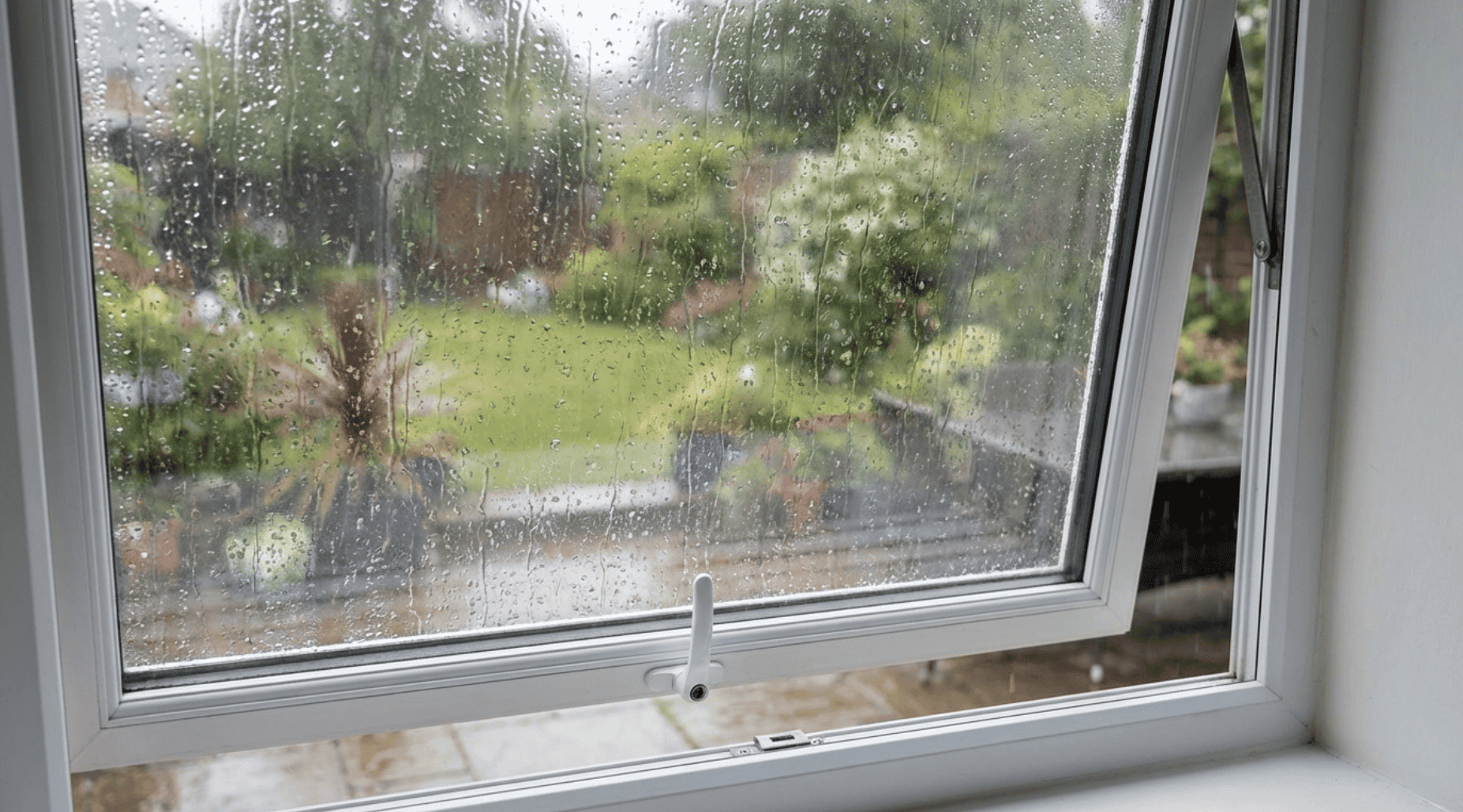
A top-hung window is hinged along the top edge rather than the side.
It opens outward from the bottom, like a small awning.
Because the opening faces downward and outward, rain tends to run off the glass rather than into the room. That runoff makes top-hung a sensible choice for ventilation in wet weather.
We fit top-hung windows most often above a fixed lower pane, or in bathrooms. They suit anywhere you want a steady trickle of fresh air without the window fully open.
They’re also useful where a side-hung casement would swing into a walkway outside. A top-hung sash projects less into the space below it.
Sliding sash windows
A sliding sash window, sometimes called a sliding window, has two sashes.
They move vertically past each other inside the window frame, rather than swinging open on a hinge.
Push the bottom sash up and you get ventilation at the base of the window.
Drop the top sash down and warm air can escape near the ceiling instead.
The look period properties expect
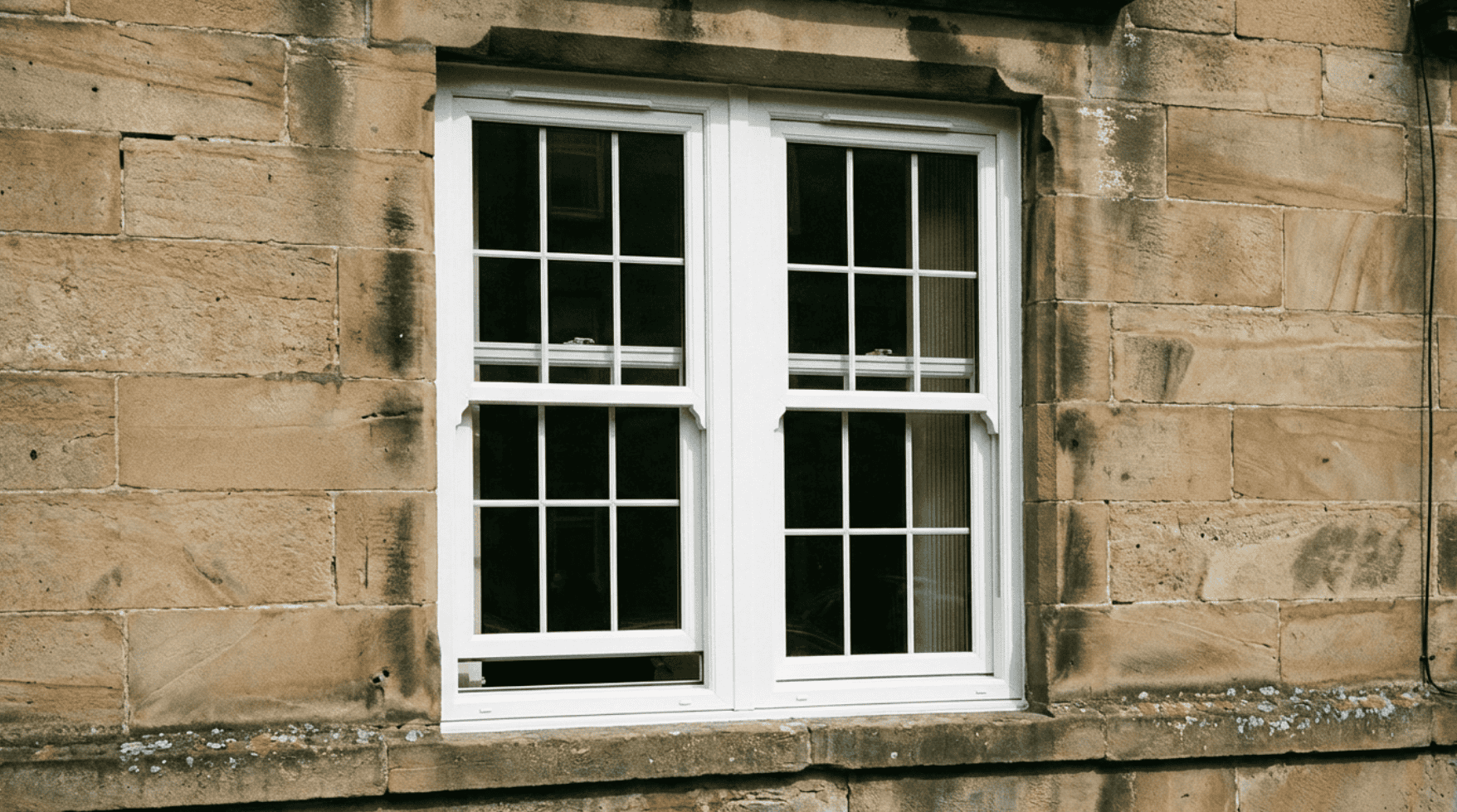
Sliding sash is the traditional window style you’ll see across Georgian, Victorian, and Edwardian streets throughout Scotland.
It’s the opening type most closely tied to a period property’s original character.
Our uPVC sliding sash windows are engineered to recreate that smooth vertical movement and slim sightlines.
Thermal performance and security are brought up to modern standards at the same time.
If your home already has timber sash windows, our team can talk you through what upgrading to uPVC actually changes during a free survey.
French windows
French windows are a pair of casements that open outwards together from the centre. There’s no central post splitting the opening in two.
Once both sides are open, you get a full, uninterrupted gap.
That uninterrupted gap makes French windows useful anywhere you want a window to double as a doorway-style opening onto a garden or balcony.
Because both sashes open fully, French windows give you the widest practical opening of any style covered here.
Worth considering for a dining room or garden room, or anywhere you’d rather open the whole wall up on a warm day.

Fixed windows
Not every pane in a window needs to open. A fixed window, sometimes called a dead light, is a sealed glazed panel with no opening mechanism at all.
You’ll often find fixed panels built into a bay window or a bow window. The angled or curved side panels open as casements, while the flatter central section stays fixed.
Leaving a section fixed keeps costs down. It also removes a moving part that could eventually need adjustment, while the opening panels elsewhere still handle ventilation.
Most of the bay and bow windows we install are configured this way, mixing fixed and opening panels in the same frame.
Security and ventilation across opening types
The hardware behind an opening type does the day-to-day work.
Multi-point locking is standard across our windows and doors range, locking the sash to the frame at several points instead of just one.
Multi-point locking applies whether you’ve chosen casement, tilt and turn, top-hung, or sliding sash.
The opening type only changes how the window moves, while locking security comes down to the hardware.
Trickle vents and background ventilation
Most of our windows can include trickle vents, small controllable openings built into the top of the frame.
They let a little fresh air circulate even when the window itself is closed and locked.
Casement and French windows benefit from this most, since neither has a tilt-only setting the way tilt and turn does.
A trickle vent gives you that same background airflow without opening the sash at all.
Child safety on upper floors
Tilt and turn windows are popular in flats partly because the tilt position gives ventilation without the wide-open turn function being left accessible.
Restrictors can be fitted to limit how far any opening type swings or slides.
Raise this with our team if the window is going into a child’s bedroom or a room on an upper floor. We’ll talk through the options with you during the survey itself.
Choosing the right opening type for each room
The right opening type changes room by room across a house.
Kitchens and bathrooms tend to suit casement or top-hung windows, since a small, constant airflow does the job better than one big opening.
Bedrooms on upper floors often work better with tilt and turn. Cleaning the outside glass is far easier without a ladder.
Period properties usually call for sliding sash, to keep the street-facing character intact. A garden room or dining space might get more use out of French windows that open the whole wall up in summer.
You don’t need to work out room-by-room opening choices alone.
Our team talks through it during a free home survey, and we’ll tell you honestly which opening type suits each space.
Flats and tenements
Outward-opening windows aren’t always practical several floors up, especially above a shared path or a busy street.
Tilt and turn avoids that problem entirely, since the main opening swings inward.
Top-hung windows work too, since they open outward but stay tucked close to the frame. Casement windows can still work on lower floors where there’s clear space outside.
Conservation areas and listed buildings
If your property sits in a conservation area, the local authority may have views on what a replacement window should look like.
Sliding sash and flush casement both tend to satisfy those requirements better than a standard overlapping casement.
We’ll flag anything relevant during your survey. Mention any conservation status when you book, so we can bring the right options with us.
Does opening type affect energy efficiency?
The glazing and the frame drive most of a window’s insulation performance.
Opening type has a smaller effect, but it isn’t zero.
A casement window seals by pressing the whole sash against the frame when closed. That compression tends to give a slightly tighter seal than a sliding sash, where the moving parts sit against brush seals instead.
In practice, the difference is minor once you’re comparing modern uPVC windows with proper weatherstripping.
Choosing the right opening type for how you’ll actually use the room matters more than chasing a marginal insulation gain.
Window opening types FAQs
What are the different ways a window can open?
The main opening types are casement, tilt and turn, top-hung, sliding sash, and fixed panels that don’t open at all. French windows are a pair of casements opening together.
Which type of window opening is best for a small room?
Casement or top-hung windows tend to suit smaller rooms best, since the sash swings outward rather than taking up space inside. A tilt and turn window’s turn function needs clear space to swing into.
Can I mix opening types in the same house?
Yes, and most homes we work on do exactly that. It’s common to fit casement or top-hung windows in kitchens and bathrooms. Tilt and turn tends to go upstairs, and sliding sash at the front of a period property.
What’s the difference between casement and flush casement?
Both hinge at the side and open outward the same way. The difference is how the sash sits when closed. A standard casement overlaps the frame, while a flush casement sits level with it for a more traditional look.
Are sliding sash windows harder to clean than casement?
Modern uPVC sliding sash windows are easier to clean than the timber originals. Ask our team about the cleaning access on the specific system we’d fit, since it varies by property and opening size.
Talk to us about the right opening type for your home
Book a free home survey and our team will walk through each room with you. We’ll measure the openings and talk through which style of window fits where.
Call our Glasgow showroom on 01355 271 223 or request a free quote online.
