


Not every gap in a wall is a neat rectangle. Bay fronts curve outward and gable ends taper to a point. Older tenements across Glasgow and Edinburgh often have openings that no off-the-shelf window was ever built to fill.
Fit the wrong type of window into a space like that, and the mismatch shows from the street.
You’ll know your window options before choosing new windows.
Casement windows and other standard window styles – By double glazing Glasgow experts
Five window types cover almost everything we fit as a straight replacement: casement, top-hung, tilt and turn, French and sliding sash.
Our uPVC casement windows hinge at the side and open outward, and they’re simple, secure and easy to clean from inside.
Top-hung windows use the same idea but hinge along the top, so they can stay open a crack in the rain.
Tilt and turn windows do both jobs: tilt inward from the top for ventilation, or turn fully inward on a side hinge for cleaning.
French windows open as a pair with no central post.
Sliding sash windows are a less common sliding window type these days. They still keep the vertical look of a period property, running on modern uPVC mechanisms underneath.
You’ll usually want one of these five window types for a standard rectangular opening, whatever room it’s in. Bay windows, bow windows and shaped windows solve the openings none of them can fill.
Bay windows and bow windows
Bay windows
A bay window adds real floor space, and it can turn a cramped lounge corner into a proper window seat.
Because the panels sit at angles to each other, it also catches natural light from several directions through the day.
That extra space and light make bay windows ideal for a dining corner or a reading nook.
You’ll find them on both classic and modern homes, from sandstone terraces to new-builds, across Glasgow and Edinburgh.

Bow windows
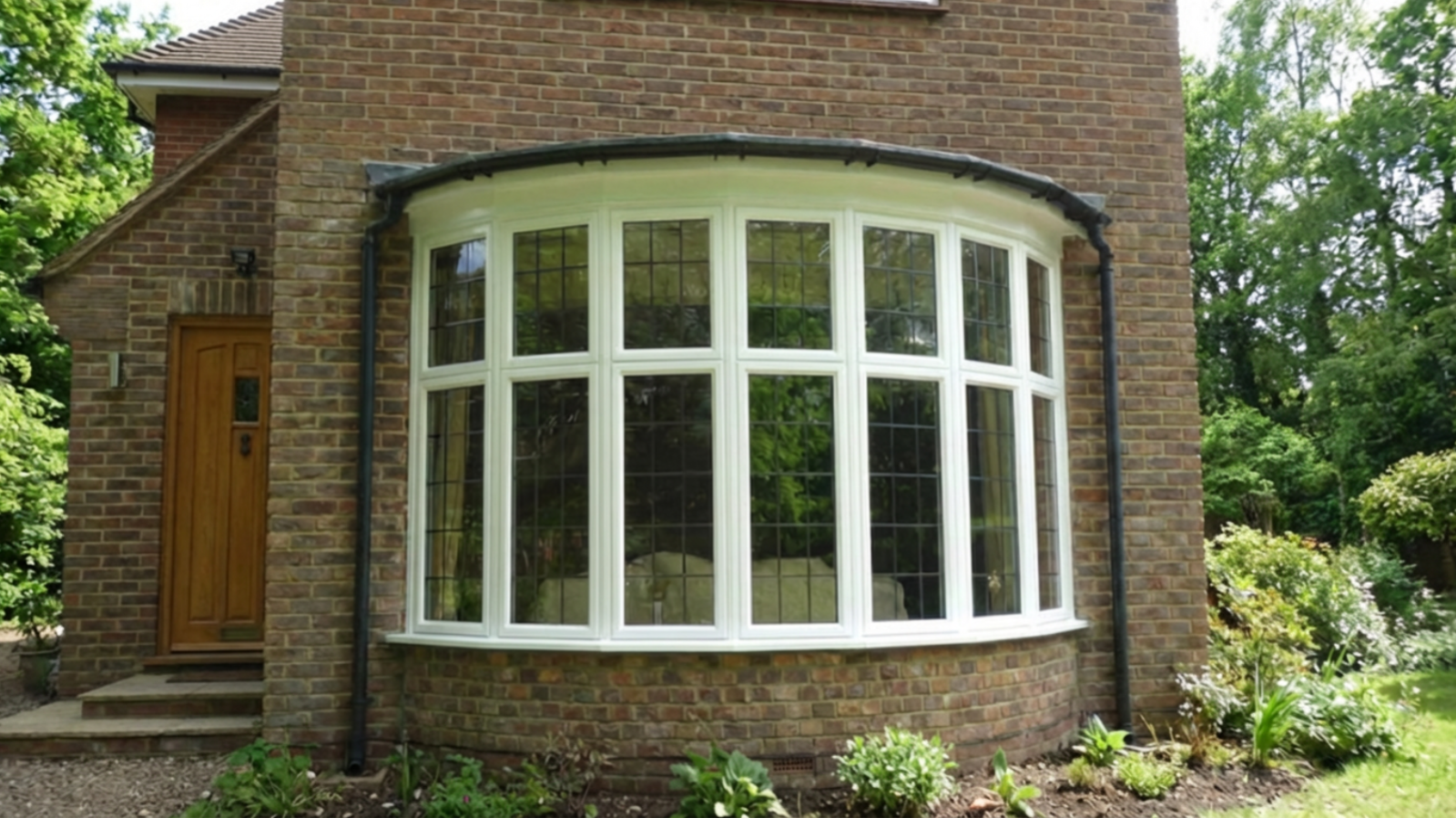
A bow window achieves a similar effect with a gentler curve.
It’s built from four or more narrow panels set at shallow angles, instead of the three or five straight ones a bay window uses.
The curve tends to suit Victorian and Edwardian facades particularly well. It’s a common sight on the tenements and townhouses of Edinburgh’s New Town and Glasgow’s west end.
If you’re weighing up bay windows against bow windows, look at the existing architecture first.
It usually settles the choice faster than personal taste does, and in a period property, a mismatched window stands out immediately.
Shaped and custom windows
A gable end, a stairwell, or the space above your front door all need something a standard window style can’t provide. The same goes for an old arched window opening in a listed property.
Shaped windows are made for exactly these situations.
A fitter surveys the exact opening, and the frame gets manufactured to that shape and size rather than pulled from stock.
The shapes available go well beyond a simple rectangle. They give you a unique window and far more design options than a catalogue frame ever could.
Double glazing comes as standard, with triple glazing available as one of the glazing options in certain configurations. Choosing an unusual shape doesn’t mean giving up on energy efficiency.
Arched windows
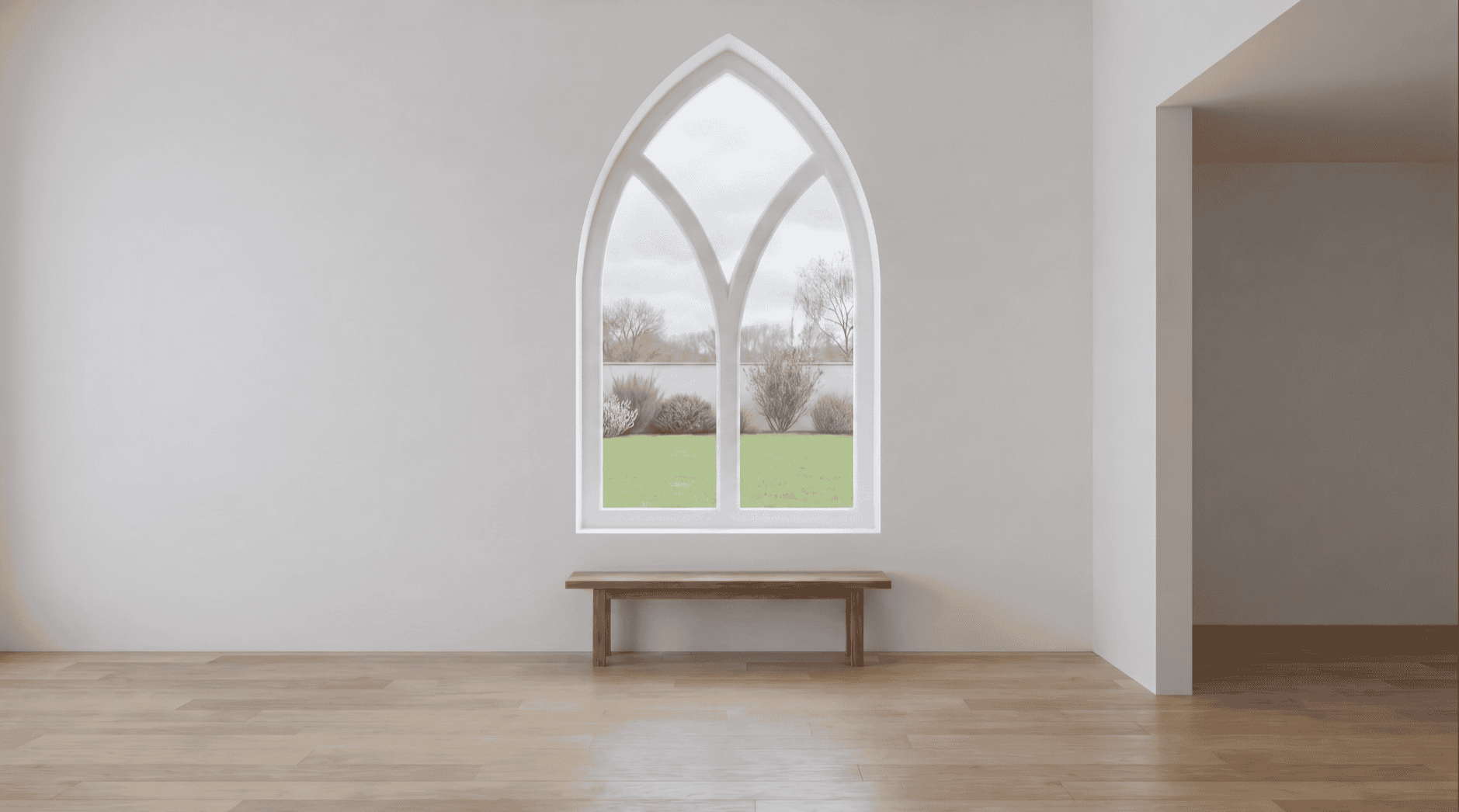
An arched window rounds off the top of an otherwise ordinary frame. It works well above a front door or over a staircase.
Full, half and quarter arches are all achievable. The arch can sit above a working casement or tilt and turn vent, so the shape doesn’t cost you ventilation.
Circular and bullseye windows
A circular window is a full round pane, and it’s usually a fixed window rather than an opening one.
It works well as a unique feature in a gable end, a stairwell landing, or a bathroom, where privacy matters more than airflow.
The traditional version of this shape, seen in many period properties, is a bullseye window.
It’s a smaller circular pane, sometimes fitted with decorative glazing bars, that echoes Victorian and Edwardian detailing without losing modern thermal performance.
Gable and gable end windows
Where a roofline meets an outside wall, it leaves a triangular gap that no rectangular frame can fill. Gable end windows are cut to match that triangle exactly.
You’ll typically need one on a bungalow or a dormer conversion, where the roof shape rules out anything standard.
Raked windows
A raked window has one side cut at an angle to follow a sloping roofline, rather than the symmetrical point of a gable window. It comes up less often than an arch or a gable shape.
Raked windows appear regularly in loft conversions and extensions, where the pitch of the roof decides the shape.
Choosing the right window for your home
Match the shape to the architecture
A Victorian tenement with original arched stonework calls for an arched window.
A modern extension with a sloped roof usually needs a raked or gable window, since no other shape fills the gap properly.
A dark stairwell or landing rarely needs to open at all. A circular or bullseye window can work there instead of another standard rectangular shape. Think about how the room gets used first, then choose the shape to match.
Consider premium options
Fancy an even bigger upgrade? Why not consider our triple glazing and noise reduction window solutions.
The choice is yours with The Advanced Group!
Shaped windows: your questions answered
What are shaped windows called?
Shaped windows go by different names depending on their form. An arched window is sometimes just called an arch window, and a round window is a circular window. The traditional circular design found in period properties is a bullseye window. Triangular windows at the peak of a roof are gable or gable end windows. A window with one angled side following a roofline is a raked window.
Can shaped windows be double glazed?
Yes. Every shaped window meets Scotland’s building regulations for replacement glazing as the minimum. Triple glazing is available in certain configurations for an even lower figure.
Can I fit a shaped window above my bi-fold doors?
Yes, and it’s a popular configuration. An arched glazed panel above bi-fold doors brings in a considerable amount of extra natural light.
Get the perfect window shape for your home
Even a standard rectangular opening isn’t always a perfect rectangle. Walls settle and shift over the years, so two openings that look identical rarely measure exactly the same. That’s why every window we fit, shaped or not, is measured and made to order rather than pulled from a standard size.
Choosing new windows doesn’t have to mean guessing at shapes, or hoping a standard size happens to fit. Whether you need one arched panel above a front door or shaped windows across a whole gable end, we can help.
We survey, manufacture and fit uPVC windows and doors to the exact shape your home needs.
Every installation is backed by a 15-year guarantee and 0% finance options across Glasgow, Edinburgh and the rest of Central Scotland. And recyclability is built into our business design.
Book a free survey and we’ll tell you honestly whether your home needs a custom shape. Or, if one of our standard window styles would do the job just as well, we’ll say so.
