


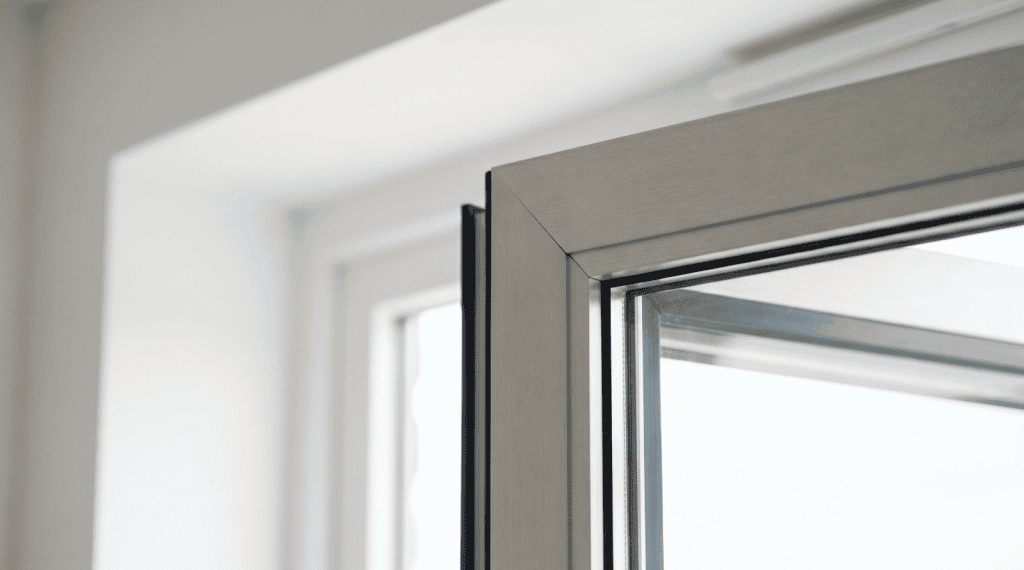
External bifold doors face sustained weather exposure, and Scotland’s climate is particularly demanding. Extended wet periods, temperature swings across the seasons, and persistent wind put joinery under pressure in ways that occasional dry-climate showers don’t.
The material choice affects more than appearance: it determines how much maintenance the door needs, how reliably it operates year-round, and how long it performs before needing attention.
This comparison covers the main differences of deciding between aluminium and timber bifold door frames.
Maintenance – Advice From Edinburgh Bifold Door Professionals
Timber bifold doors need regular maintenance to stay in good condition.
The painted or stained finish requires renewing every few years, and any areas where the treatment has worn away need sealing before moisture gets into the wood beneath.
Leave timber untreated and the consequences are progressive: paint peels, exposed wood absorbs water, joints swell, and frames begin to distort.
The door starts to stick or becomes difficult to lock, and the deterioration picks up pace from there.
Aluminium requires far less.
A clean-down of the frame and glass, occasional lubrication of the track and hinges, and the door stays in good order. The powder-coated finish doesn’t need painting and holds its colour without fading.
Weather Resistance in Scotland’s Climate
Scotland receives significantly more annual rainfall than most of the UK. The extended wet periods test external joinery in ways that occasional showers don’t.
Timber absorbs moisture during prolonged wet weather, which causes swelling, stiffness, and, over time, warping of the frame.
Aluminium doesn’t absorb water.
It stays dimensionally stable through wet weather, frost, and the temperature swings between summer and winter that in Scotland can be pronounced within a single week. The door operates the same in January as it does in July.
For properties in exposed locations, whether facing into prevailing westerly rain or sitting on a site with limited shelter, aluminium’s weather stability makes it the more reliable material for a long-term outdoor installation.
Frame Strength and Span
Aluminium has a high strength-to-weight ratio, which is why it can be extruded into slim profiles and still carry the weight of a wide bifold set without the frame flexing.
On a five, six, or seven-panel door spanning several metres, that structural rigidity matters.
Timber frames need to be thicker to achieve the same structural performance.
This widens the visible sight lines between glass panels, reduces the overall glazed area relative to the door width, and adds weight to each panel that the track and hinges carry over years of use.
Thermal Performance
Timber has natural insulating properties.
The cellular structure of wood traps air and slows heat transfer more readily than bare metal, which gave older timber systems a genuine thermal advantage over early aluminium bifold doors.
Modern aluminium bifold doors use a thermally broken frame as standard.
A strip of insulating material is built into the aluminium profile, interrupting the cold path from outside to inside. The result is thermal performance comparable to timber.
Sight Lines and Natural Light
Sight lines are the frame sections visible between glass panels.
Narrower sight lines mean more glass and more natural light entering the room.
Because aluminium is structurally stronger than timber at the same profile width, it allows for slimmer frames across a given span.
On a wide four or seven-panel set, the difference adds up.
Multiple slim aluminium profiles across the full door width admit more light than the thicker timber frames needed to carry equivalent loads.
If maximising the glazed area is a priority, aluminium has a practical advantage here.
Aesthetics and Colour Options
Timber’s aesthetic appeal is real and worth acknowledging. The grain, warmth, and natural variation in wood give it special character.
Aluminium is available in a wide range of powder-coated colours that don’t require a maintenance commitment.
And where timber stain or paint fades over time and needs refreshing, powder-coated aluminium holds its colour for the lifespan of the door without any attention.
Security
Multi-point locking is standard on both aluminium and timber bifold doors. The locking mechanism itself is comparable between the two materials.
Which Material Works Better in Scotland
For external bifold doors on a Scottish property, we stand behind our aluminium frames.
This gives homeowners a maintenance-free and weather-resistant doors, that have great reliability in the Scottish climate.
Of course, if the look of natural wood is your priority, nothing will beat timber frames.
However for a stylish and dependable material that comes backed with our 15-year guarantee, come to our showroom and check our aluminium bifold doors for yourself!
Aluminium Bifold Doors from The Advanced Group
We supply and install aluminium and uPVC bifold doors across Central Scotland.
Our aluminium bifold doors include thermally broken frames and double glazed units as standard, with triple glazing available for properties in more exposed locations. Every installation comes with a free home survey where we measure the opening, advise on configuration, and provide a written quote with no obligation.
Call our Edinburgh team on 0131 370 0444 to get the indoor-outdoor living that you always wanted.
