


Tempered, laminated, low-E, obscured and tinted glass all do different jobs. Knowing which is which means choosing the right glass for each room instead of fitting the same pane throughout.
Here’s a rundown of each type of window glass and the glass options worth knowing about for the windows in your home. Each one suits a different room.
Insulated glass: the basics – Guide from Edinburgh glazing experts
A glazed window has two panes of glass, or three panes of glass for triple glazing, sealed together as layers of glass. A gas-filled gap between them slows down heat transfer, and most UK glazing uses argon in that gap rather than plain air.
This sealed arrangement is what people mean by insulated glass, and it’s the standard for any window built for UK energy efficiency and comfort. The glass type you choose sits inside this structure, and it’s a separate decision from how many panes the window has.
You can have tempered glass in a double-glazed unit, or laminated glass in a triple-glazed one. Double and triple glazing simply describe the pane count.
A failed seal is what causes condensation to form between the panes, which is different to the glass type itself being at fault.
Types of glass for windows
Float glass
Float glass is ordinary glass, where every other type starts, and it’s the standard glass manufacturing process behind most modern glass. Molten glass floats over a bed of liquid tin until it cools into a flat, undistorted sheet.
On its own it breaks into large, sharp shards of glass, so building regulations restrict where it can go unmodified.
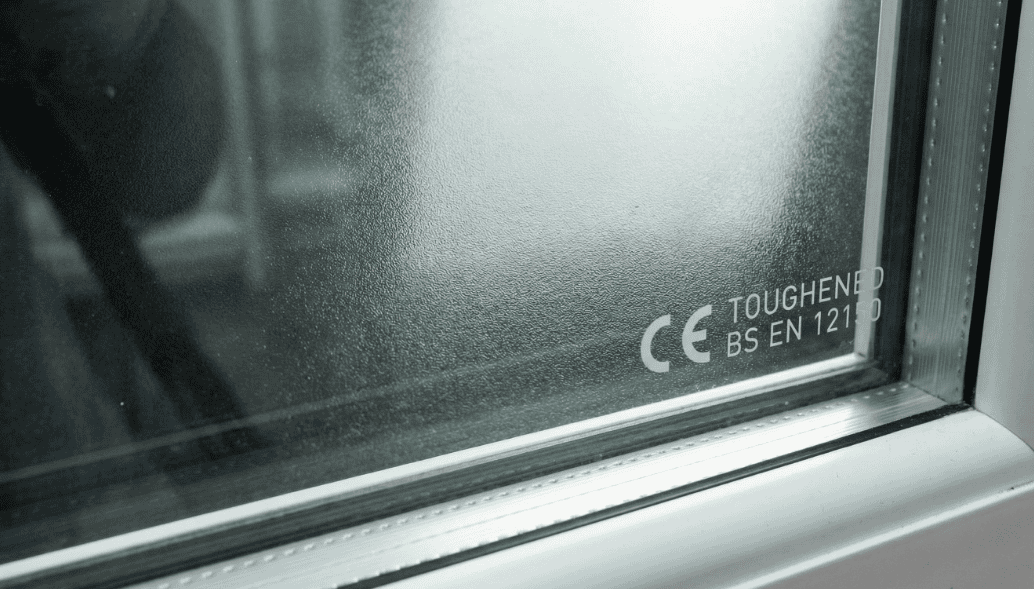
Tempered glass (or toughened glass)
Tempering means heating float glass and cooling it rapidly, which makes it roughly four times stronger.
It’s the safety glass building regulations require in doors, low-level windows and anywhere near a walkway. It crumbles into small, blunt pieces instead of sharp shards if it does break.
Laminated glass
Laminated glass sandwiches a layer of polyvinyl butyral, or PVB, between two panes. If the glass breaks, the PVB holds the pieces in place instead of letting them scatter.
The two or more layers also give better noise reduction than tempered glass on its own, so we’d recommend it for a window facing a busy road.
Low-E glass
Low-E glass is the type we’d push you toward, since it cuts energy costs more than anything else on this list. A microscopically thin metallic coating manages light and heat together.
It reflects warmth back into the room instead of letting it escape through the pane, while still letting daylight through.
It also blocks a large share of UV rays, which stops furniture and flooring fading in direct sunlight.
Our triple glazing uses a low-E coating called Soft Coat Xtra as standard, paired with argon gas. That combination is a big part of why it reaches 0.8 W/m²K.
Most new windows sold in the UK now include a low-E coating as standard, and we wouldn’t fit a replacement window without one. Once the frame and pane count are decided, the coating is what actually moves your energy bills.
Obscured and patterned glass
Obscured glass, sometimes called privacy glass or textured glass, scatters light instead of transmitting a clear image. It protects privacy without blocking the room out completely.
Daylight still gets through, but the level of visibility drops so you can’t see, or be seen, through the pane. It’s the standard choice for a bathroom window or a front door panel.
Patterns range from a light frost to a heavy, rippled texture.
The heavier the pattern, the more privacy it gives, at the cost of some light transmission.

Tinted glass and acoustic glass
Tinted glass, a form of solar control glass, has colour added during manufacturing to cut glare and solar heat gain. It suits a conservatory or living room that faces the sun most of the day.
Acoustic glass uses a thicker or laminated build specifically to cut noise. It’s worth considering for a window on a busy road rather than every window in the house.
Choosing window glass: the right glass for each room
A ground-floor door panel calls for tempered or laminated glass under building regulations. A bathroom window suits obscured glass, and a bedroom on a busy street benefits from acoustic glass.
Whether you’re going for double glazed or triple glazed windows, the glass type sits inside that decision rather than replacing it.
Both types of glazing units can use standard glass, or be upgraded with low-E coatings and acoustic layers depending on what the room needs.
Window glass FAQs
What’s the difference between tempered and laminated glass?
Between toughened or laminated glass, tempered glass is stronger and breaks into small, blunt pieces of glass. Laminated glass isn’t necessarily stronger, but the PVB layer holds the broken pieces together instead of letting them scatter. It wins on security and sound rather than raw strength.
What does low-E glass mean?
Low-E stands for low emissivity. The coating reflects heat rather than absorbing and re-radiating it, which keeps more warmth inside your home during a Scottish winter.
Is obscured glass the same as frosted glass?
Frosted glass is one type of obscured glass, created by etching or sandblasting the surface. Obscured glass also covers patterned and textured designs, so frosted is one option among several rather than a separate category.
Do I need special glass for a bathroom window?
Not by law, but obscured glass is the practical choice for privacy. Some homeowners also add a low-E coating to a bathroom window to cut down on heat loss from what’s often a smaller, colder room.
Can I mix glass types in the same window?
Yes. A low-E coating can be combined with laminated or acoustic glass in the same sealed unit. A ground-floor window on a busy road could get sound reduction, security and better insulation from a single pane of glass.
Get expert advice on choosing your window glass
At The Advanced Group our team fit both double and triple glazed uPVC windows across Central Scotland.
We’ll talk you through which glass type to choose for your windows during your free survey, rather than fitting standard glass throughout. It’s a small decision that adds up to a real difference in your home’s energy efficiency.
Every window we fit meets current UK building regulations and comes with a 15-year guarantee. 0% finance is available if you’d prefer to spread the cost.
Book a free survey and we’ll help you choose glass that matches what each room in your home needs.
