


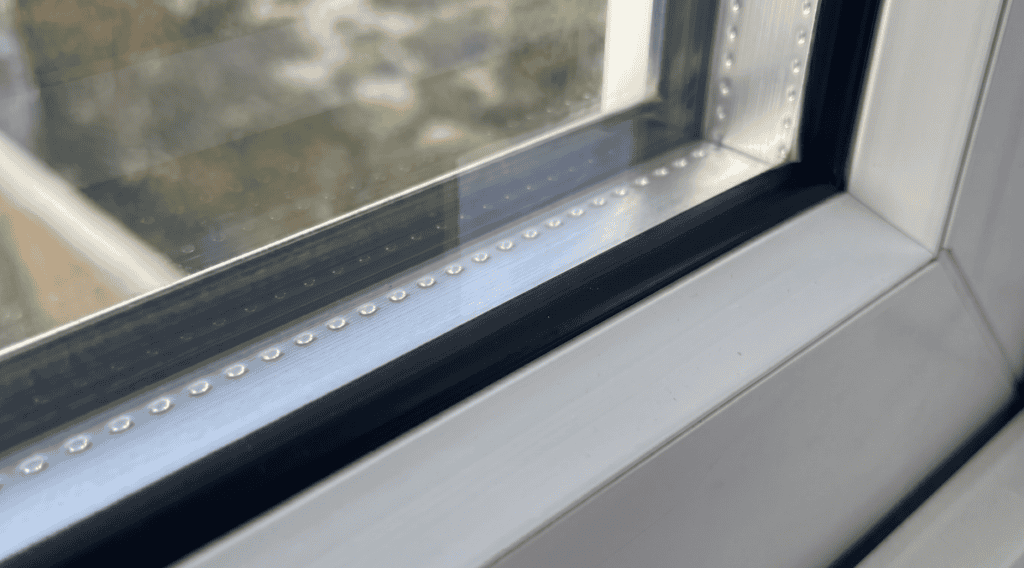
The seals and gaskets around your windows and doors do quiet work.
They prevent fluid leaks between panes, hold the cold out, and keep your double glazing performing the way it should.
Most homeowners don’t think about them at all until something goes wrong.
By the time there’s a draught you can feel or condensation forming inside the frame, the rubber is already well past the point where a quick clean would have helped.
Here’s what you need to know to keep them well maintained, written by Dundee’s leading double glazing professionals.
What Are Window Seals and Gaskets?
Seals and gaskets are the rubber components that create a tight, weatherproof connection between the glass, the frame, and the surrounding structure.
They are essential components in any double glazed window or door, and they play a role in protecting your home from draughts, moisture, and heat loss.
Gaskets sit between two stationary surfaces (typically the glass unit and the frame), compressing to hold the sealed unit firmly in place.
Seals (sometimes called compression seals or weatherstripping) run around the perimeter of the opening, so when you close a casement window or a door, the rubber compresses and creates a draught-proof barrier.
Most are made from EPDM rubber or rubber-plastic composites, valued for staying flexible through temperature swings and standing up to the weather.
When they’re in good condition, they do their job quietly every time you close a window.
But when they wear out, that’s usually where draughts and damp start creeping in, which is why keeping an eye on their condition matters.
Early Signs of Wear to Watch For
Catching early signs of wear on your seals or gaskets is far less expensive than discovering the damage after the fact.
Run your fingers along the seal around a closed window or door and you’ll learn a lot.
- Visible cracking or splitting in the rubber surface
- Sections that have pulled away from the frame or sit loose in the channel
- Noticeable stiffness when the frame closes, or a gap you can see daylight through
- A draught you can feel along the edge of a closed window on a windy day
- Moisture or condensation collecting on the inside face of the frame (separate from misting between panes, which points to sealed unit failure)
- Discolouration, hardening, or a brittle texture where the rubber used to be pliable
Worn seals don’t always fail dramatically.
More often, they degrade gradually, and the first signal is a heating bill that creeps up without obvious reason.
Damaged seals allow warm air out and cold Scottish air in, and the gap is usually too small to feel unless you know where to look.
Catching wear or damage early prevents leaks and draughts from becoming a bigger problem, and it’s far easier and cheaper to address than late-stage deterioration.
Seal and Gasket Maintenance Best Practices
The best practices for seal and gasket care come down to three regular maintenance tasks: inspection, cleaning, and conditioning.
This keeps your windows are doors protected, and your double (or triple) glazing in good health.
Regular Inspection and Maintenance
Twice a year is the standard recommendation for inspection and maintenance.
Do one in autumn before the cold sets in, and another in spring once winter has done its worst.
Scottish winters are particularly hard on rubber. Freeze-thaw cycles accelerates the kind of wear that regular inspection catches early.
Close each window and door fully, then check the perimeter for gaps, feel for draught, and examine the visible rubber for cracking or displacement.
Pay particular attention to north-facing and exposed elevations, where rubber seals take the most punishment from wind and rain.
Cleaning Your Seals and Gaskets
Dirt and debris that work into the seal channel act as an abrasive, gradually cutting into the rubber.
Left unchecked, this leads to draughts, condensation, and heat loss, so regular cleaning isn’t optional.
Clear the channel of grit and compacted debris using a soft cloth or soft-bristled brush with mild, warm soapy water.
Work carefully along the seal, including the corners and base of the channel where debris collects. Rinse with clean water and dry thoroughly, as trapped moisture encourages mould growth.
How you clean matters as much as how often.
Bleach, solvents, and abrasive cleaners all cause the rubber to harden and crack far sooner than normal ageing would.
Stick to mild soap and water, and your seals will stay supple and functional for much longer.
Conditioning Rubber Seals to Preserve Elasticity
Cleaning removes dirt.
Conditioning is what preserves elasticity and prevents the rubber from drying out.
A silicone-based conditioner, applied lightly after cleaning, keeps the seal flexible through temperature changes and helps maintain the rubber’s ability to create a tight seal every time the window or door closes.
Apply a silicone-based product with a cloth or cotton pad, working it gently into the surface.
A thin, even coat is all you need.
Just always make sure to check chemical compatibility.
Petroleum-based lubricants and many multipurpose oils are not compatible with EPDM rubber and will cause degradation over time.
Use proper, silicone-based products rather than generic substitutes.
Silicone-based lubricants condition the rubber without attacking the compound, and they help maintain the elasticity that allows seals to create a tight connection at the frame.
Using the right product twice a year ensures optimal performance and longevity from your seals and gaskets.
What Causes Gasket Failure
Age and UV exposure account for most gasket failure in Scottish homes, but several factors accelerate the process significantly.
UV Exposure and Temperature Fluctuations
Prolonged UV exposure degrades rubber compounds, causing them to lose elasticity and become brittle and crack over time.
Extreme weather conditions and the repeated expansion and contraction from temperature fluctuations weaken the material year by year.
Conditioning helps offset these effects, but it can’t eliminate them entirely.
If your window is in a particularly exposed location, your gasket or seal may fail earlier than expected.
Wrong Cleaning Products
Using harsh chemicals, bleach, or abrasive products on rubber seals is one of the fastest routes to premature gasket failure.
Once the surface layer breaks down, the degradation accelerates quickly.
This is why proper cleaning technique matters. The wrong product can shorten a seal’s lifespan by years.
Poor Installation Techniques
A seal or gasket that was fitted under tension, cut too short, or crimped at a corner will fail sooner than one installed correctly.
If seals on recently fitted windows are already showing early wear, installation techniques are worth investigating, alongside the quality of the rubber used.
The Advanced Group provides 15-year guarantees on all our window installations to help provide you the peace of mind in your investment.
Contaminants in the Channel
Grit, debris, and contaminants from entering the seal channel act as an ongoing abrasive.
Keeping the channel clean prevents this mechanical wear from combining with natural rubber degradation and shortening the seal’s useful lifespan.
Seal and Gasket Replacement: When to Stop Maintaining
Regular inspection and timely replacement are two separate things, and there’s a point where maintenance can’t reverse wear.
If the rubber has become brittle and cracked along its full length, if sections have separated from the frame completely, or if you’ve conditioned and cleaned the seal and the draught persists, the seal needs replacing rather than maintaining.
A proper inspection by a professional will help you understand where your seals and gaskets stand before you decide whether to upgrade to new, more energy-efficient windows.
Check our our guide on double glazing facts and myths, and why you should consider upgrading!
Book a Free Home Survey Across Scotland
If your seals and gaskets are showing signs of wear, or you’re dealing with draughts and condensation that maintenance hasn’t fixed, The Advanced Group is here for you.
We offer free home surveys across Scotland.
Our team will come to your home, assess your windows and doors, give you an honest picture of what’s needed, and advise whether repair or replacement makes better sense for your situation.
We’ve been fitting windows and doors in Scottish homes since 1988. That’s over 38 years of trusted industry experience.
We keep on top of all the latest innovations and building regulations, including the new regulations regarding trickle vents, so you can receive the best products on the market.
Get a free quote online or explore our 0% finance options if you’re considering new windows or doors as the longer-term solution.
