


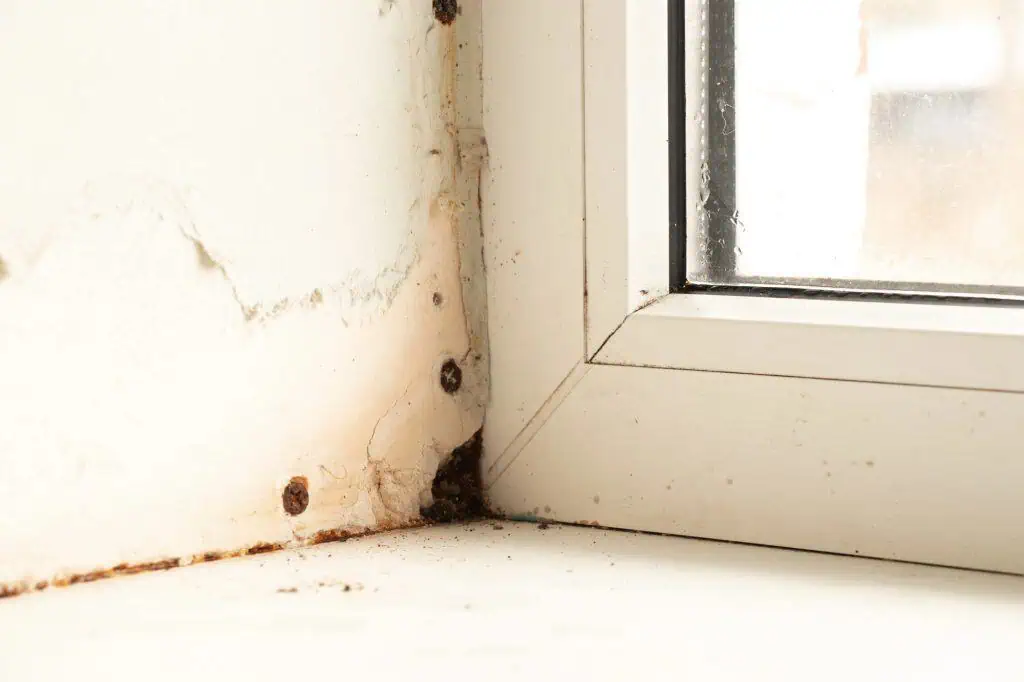
Why Does Mould Develop Around Windows? – Advice By Double Glazing Edinburgh Experts
Mould thrives in damp, humid environments with poor air circulation.
Your windows are often the coldest surface in your home, as a glass barrier between you and the outside. They are particularly vulnerable to mould, as the difference between the cold and the warm air creates the ideal conditions for condensation to form.
Condensation and dampness create the ideal breeding ground for mould spores. And without proper ventilation, these spores settle and grow into the black mould you see around your windows.
Health Risks Associated with Window Mould
While mould can certainly harm your window frames, the real concern is the health risks it poses to anyone living inside the home.
Allergic Reactions and Asthma Attacks from Mould
When mould grows, it releases tiny spores into the air, which can trigger allergic reactions and asthma attacks.
Illness and Respiratory Problems
People with asthma, allergies, or compromised immune systems are particularly vulnerable. However, living with mould can affect even the healthiest of people.
Common symptoms associated with mould exposure include nasal congestion and sneezing, throat irritation, coughing and wheezing, eye irritation, and even skin rashes.
Mental Health Problems and Anxiety
Living with mould can cause stress and anxiety, negatively impacting mental health.
Nobody wants to live in a damp, mouldy room, so make sure to address any signs of mould immediately.
Long Term Health Consequences from Mould
Living with mould, especially black mould, for too long can cause some serious long-term conditions.
That’s why it is essential to tackle mould promptly to maintain a healthy home and a healthy life.
How to Remove Existing Mould Around Windows
If you’ve already found mould around your windows, don’t panic!
Here’s a step-by-step approach to removing it safely:
1. Gather Your Supplies
Before starting, ensure you have everything needed. This is to ensure you are protected during the treatment process.
You will need:
- Thick rubber gloves
- Face mask
- White vinegar or a mould-specific cleaning product
- Clean cloths, sponges, or a soft brush
- Spray bottle
- Dry cloth
2. Safe Removal Process
Start by opening windows to ventilate the area.
Mould spores can fly and travel, so it is important to increase ventilation in your home whilst treating the mould.
Fill a spray bottle with white vinegar or your chosen cleaning solution.
Apply the cleaning product directly to the mouldy areas around your windows and window frames.
Make sure to let it sit for about an hour to kill the mould spores effectively.
Using a damp cloth, wipe away the mould gently to avoid spreading spores. For stubborn patches, you might need a soft brush.
Once clean, use a second dry cloth to wipe the area completely dry, as any remaining moisture could allow mould to return.
For particularly severe cases of black mould, especially on porous surfaces like timber window frames and sills, you must seek professional help. This is because the mould might have penetrated deeper than the surface level.
Effective Ways to Prevent Mould Around Windows
Mould can be difficult to remove fully once it has formed, that is why prevention is always better than cure.
Improve Ventilation
Poor ventilation is one of the primary causes of mould growth.
Make it a habit to open windows regularly, even in colder months, to allow moist air to escape.
This is particularly important in high-moisture areas like kitchens and bathrooms.
Install and use extractor fans in bathrooms and kitchens to remove humid air quickly.
Consider using trickle vents in your windows, which provide constant background ventilation without significantly affecting temperature.
Control Condensation
Maintain a consistent temperature throughout your home to minimise cold spots where condensation can form.
Make sure to wipe excess moisture and condensation from window surfaces and window sills each morning to remove the moisture that mould spores need to grow.
Consider using a dehumidifier in problem rooms to reduce the amount of moisture in the air.
Upgrade Your Windows
If you’re consistently battling mould despite your best efforts, your windows themselves might be the problem.
Modern double or triple glazed windows provide better insulation, keeping inner surfaces warmer and reducing condensation. Ensuring your windows are properly sealed helps prevent damp air from entering from outside.
When to Seek Professional Help
While many mould issues can be addressed with the methods above, sometimes professional intervention is necessary.
If your mould covers a large area (more than one square meter), it is best to contact the experts.
Also, if you are repeatedly having to do DIY treatments on your mould, it is a huge sign that the mould may be growing inside the walls or under surfaces. In these instances, professional help is advisable.
Never hesitate to ask for professional help.
Professional services can identify the underlying cause of black mould or persistent mould. They can provide comprehensive solutions to address the root problems rather than just the symptoms.
Frequently Asked Questions About Mould Around Windows
Why do I have mould around my windows even with double glazing?
Even with double glazing, mould can develop if there’s too much moisture in your home, combined with poor ventilation.
How often should I clean mould from my window frames?
Any visible mould should be cleaned immediately to prevent it from spreading. As a preventative measure, wipe down window frames weekly during winter to help remove moisture before mould has a chance to develop.
We also have a trusted guide on how to clean uPVC window frames that aren’t affected by mould, if you want to learn how to prolong your window’s lifespan.
Can plants near windows contribute to mould growth?
Yes, plants release moisture into the air. This can increase humidity levels around windows. If you have experienced window mould, consider moving plants away from problem windows to help.
Does having curtains or blinds increase the risk of mould?
Curtains or blinds can restrict airflow around windows, increasing condensation and raising the risk of mould growth. Ensure curtains don’t block radiators, and keep them open during the day when possible.
Contact The Advanced Group for Expert Double Glazing Needs
Single glazed windows are more prone to condensation and therefore mould problems.
If you are repeatedly experiencing mould issues, consider upgrading your windows to help keep mould at bay.
Here at The Advanced Group, we offer expert double glazing solutions to upgrade your home. With over 37 years of quality installations and expert customer service, we are here to help your upgrade your living environment.
For more information, call our friendly Edinburgh team today on 0131 370 0444.
