


When you’re comparing window specifications, the focus usually falls on the glass. The number of panes, the gas filling, whether low-emissivity coatings are present.
Specifying the right type of spacer bar rarely comes up in those conversations, yet it can improve the overall U-value measurably and is a significant factor in whether condensation appears at the internal glass surface around the perimeter of the frame.
What is a spacer bar in a double glazed unit? – by Edinburgh double glazing professionals
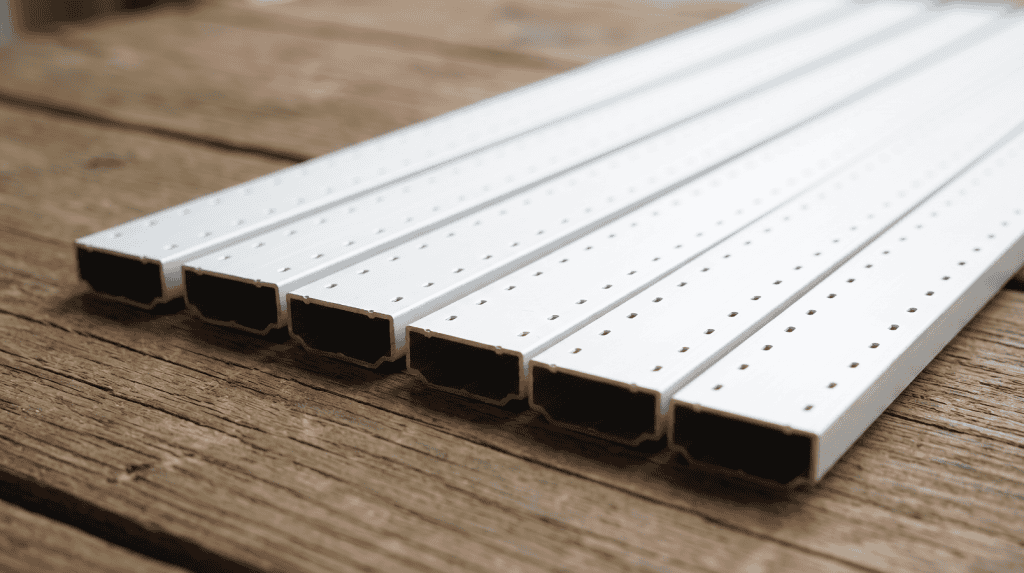
A spacer bar sits between the two glass panes of a sealed unit, bonded to each with sealant and running continuously around the full perimeter.
The cavity it creates is filled with argon, an inert gas that conducts heat less readily than air, which insulates across the centre of the unit.
Inside the spacer bar is a desiccant that absorbs moisture from the cavity, keeping the sealed unit dry.
The width of the spacer bar determines the cavity depth. This typically sits between 12mm to 16mm for double glazed units.
A wider argon-filled cavity generally gives a slightly lower centre pane U-value.
But the spacer bar’s role in the whole window thermal performance goes beyond cavity width. The material used at the glass edge is where the thermal efficiency of the sealed unit either gains or loses ground.

Why spacer bar material affects U-values
The whole window U-value under EN ISO 10077 is calculated from three separate components.
The centre pane U-value of the glazing (Ug), the frame U-value (Uf), and the linear thermal transmittance at the glass edge (sometimes noted as psi) which runs around the entire glazed area. The spacer bar determines that third value, and in a window with multiple panes, that edge zone runs around every glazed perimeter.
Traditional metal spacers and thermal bridging
Traditional aluminium spacer bars have high thermal conductivity.
A thermally conductive material bridging the warm interior glass surface and the cold exterior glass creates a thermal bridge at the edge of the glass unit, and heat is lost along that bridge continuously.
Traditional aluminium spacer bars were the industry standard when double glazing became widespread because they were structural and cheap, and the gain from replacing single glazing was large enough that the edge loss was considered acceptable.
As regulations continue to tighten and whole window U-values are calculated more precisely, the cold edge effect from aluminium spacer bars has become harder to ignore.
The internal glass surface at the perimeter runs cooler than the centre pane, which is why condensation appears at the edges and corners of older double-glazed windows first.
That visible condensation is the result of the glass surface dropping below dew point at the frame perimeter, driven by the thermal bridge in the spacer.
Warm-edge composite spacers
Warm-edge spacers are made from non-metallic or composite materials with lower thermal conductivity than traditional aluminium spacer bars.
Types of spacer in this category include flexible foam spacers, polymer composites, and hybrid constructions combining a structural layer with an insulating foam core.
The material used in each case is less conductive than metal, which reduces heat transfer at the edge of the glass unit and raises the temperature of the internal glass surface around the perimeter.
Switching from aluminium to a warm-edge composite spacer typically improves the whole window U-value by around 0.1 W/m²K.
Combined with low-emissivity coatings and argon gas filling, warm-edge spacers are part of what allows modern A-rated double glazing to achieve overall U-values around 1.2 W/m²K or better. This helps minimise the gap between the centre pane performance and the whole window figure.
Condensation and the warm edge effect
Condensation on windows forms where the internal glass surface drops below the dew point of the room air.
Traditional aluminium spacer bars create a cold strip at the edge of the glass unit, and that cold edge is where condensation collects first. Typically at the bottom corners, where cold air pools near the floor and the glass surface is already at its coolest.
Warm-edge spacers raise the temperature of the internal glass around the perimeter, which reduces condensation risk substantially.
The comfort and energy benefit of a warmer glass surface extends beyond the visible condensation issue. A surface closer to room temperature produces fewer convection currents against the cold glass, and the space near the window feels warmer at the same air temperature.
Surfaces warmer at the glass edge also reduce the radiant cold effect that makes sitting near windows uncomfortable in older properties during cold weather, giving better results for insulation and for general comfort in energy-efficient homes.
Warm-edge spacers in double and triple glazing
Spacer bars in double glazing run around one sealed cavity.
In triple glazed units, there are two spacer bars, one between each pair of glass panes, running around each glazed perimeter in the unit.
The edge zone contribution to heat loss doubles accordingly, which means the thermal bridge effect of a thermally conductive spacer is proportionally more damaging to the overall thermal performance of a triple glazed unit than a double glazed one.
Warm-edge spacers become more important, not less, as glazing specification moves up to triple.
Our Advanced 70+ uPVC profile achieves U-values as low as 0.8 W/m²K in triple glazed configurations.
Warm-edge spacers are part of what gets the specification to that level alongside low-emissivity coatings, argon gas filling, and the multi-chamber frame profile.
Achieving that thermal efficiency requires every element of the sealed unit to be specified correctly, the glass, the gas filling, and the spacer.
Your spacer bar questions answered
What is the spacer bar on a double glazed unit?
A spacer bar is the sealed strip running around the inside edge of every double glazed unit, holding the glass panes apart and creating the cavity for the argon gas filling. Spacer bars in double glazing contain a desiccant to keep the cavity dry and are bonded to both glass panes with sealant as part of the hermetic seal of the unit.
What factors affect the U-value of a window?
The whole window U-value combines the centre pane glazing U-value (affected by glass specification, low-emissivity coatings, cavity width, and gas filling), the frame U-value (Uf, determined by the window frame material and construction), and the linear thermal transmittance at the glass edge, which is where the spacer bar type has its effect. Better insulation at any of those three points improves the overall U-value. Warm-edge spacers address the edge zone specifically, without changing the glass or frame specification.
Energy efficient space bars with The Advanced Group
Every sealed unit we supply uses thermo-spacers as part of a specification built to deliver our outstanding A-rated WER to help lower your energy bills.
For energy-efficient double glazed and triple glazed windows across a full range of window styles, The Advanced Group has you covered. Our uPVC windows are backed by a 15-year guarantee covering the sealed glass unit, frames, hardware, and workmanship.
Contact our friendly team today to learn more about our products and what they can do for your home. Simply call our Glasgow showroom on 01355 271 223 or speak with our Edinburgh team on 0131 370 0444 to request your free quote.
