


Rising energy costs, tighter building regulations, and growing awareness of climate change have pushed manufacturers to rethink how windows are made, what materials are used, and what happens to them at the end of their service life.
The result is a wave of sustainable innovations that affect everything from the raw materials going into a factory to the energy performance of the finished product sitting in your home.
Understanding what’s changing in window manufacturing helps you make a more informed and eco-conscious decision when it’s time to upgrade for you to upgrade your windows.
Why Sustainable Window Manufacturing Matters for the Construction Industry – From Double Glazing Dundee Professionals
Buildings account for roughly 40% of energy-related greenhouse gas emissions in the UK. A significant proportion of that comes from heat loss through windows and doors.
Poorly insulated windows force heating systems to work harder, which increases energy consumption and pushes up energy bills.
So the sustainability question isn’t just about how a window is made. It’s also about how much energy it saves (or wastes) over its entire life cycle once it’s installed.
The construction industry is under increasing pressure to reduce its environmental footprint.
Window manufacturers are responding with innovative solutions at every stage of the process. From sourced materials, manufacturing processes, product performance, to end-of-life recycling.
Some of these changes are incremental. Others represent a genuine shift toward sustainable building practices that the industry has needed for a long time.
If you are thinking about buying new windows, here is some ways window manufacturing has gotten more environmentally friendly.
Sustainable Materials Used in Window Frames
The materials used in window frames have the biggest impact on the environment during production.
Each of the three main frame materials has a different sustainability profile, and all three are getting greener.
uPVC and Recycled Content
Modern uPVC window frames can be recycled up to ten times without losing structural integrity. A proportion of recycled content in new frames is increasing year on year.
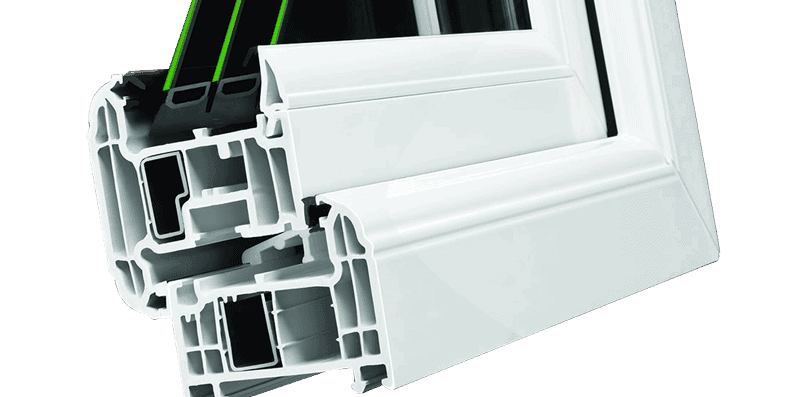
Our own Advanced 70+ window system uses uPVC that is around 80% recycled or renewable material, made from recycled frames processed by our supply partner Camden Group in Ireland.
When old uPVC windows are removed during a window replacement, the material can be shredded, cleaned, and turned into new window frames rather than going to landfill.
And because the energy required to recycle PVC is a fraction of what’s needed to produce it from raw materials the carbon savings stack up quickly.
No matter if you have a bay, bow, sash, or casement, we will ensure it is responsibly disposed of.
Aluminium
Aluminium is infinitely recyclable and loses none of its properties when remelted.
Recycling aluminium uses around 5% of the energy needed to produce primary aluminium. This makes recycled aluminium one of the most sustainable building materials available.
The challenge is that primary aluminium production (from raw materials) is extremely energy-intensive and generates significant carbon emissions. The sustainability of an aluminium window depends heavily on how much recycled content the manufacturer uses.
The good news is that the proportion of recycled aluminium in window manufacturing is climbing.
For homeowners choosing between uPVC and aluminium, both are now great sustainable window options when sourced from responsible manufacturers.
Timber
Timber is the only window frame material that actively removes carbon from the atmosphere during its growth.
A sustainably sourced timber window frame stores carbon for the duration of its service life, which can be 50 years or more with proper maintenance. The key sustainability factor is whether the wood comes from responsibly managed forests certified by schemes like FSC or PEFC.
Sustainably sourced materials make timber a strong sustainable choice for eco-conscious homeowners, particularly on period properties where the look of real wood matters.
The end-of-life picture is less straightforward.
Treated or painted timber can’t always be recycled, meaning old frames may go to landfill rather than back into the supply chain.
For a material that starts its life as a carbon store, that’s a trade-off worth knowing about.
Glazing and Coating Innovations That Reduce Greenhouse Gas Emissions
The glass in a window accounts for most of its surface area, so innovations in glazing technology have the biggest effect on thermal insulation and energy performance.
Several developments in the past few years are worth knowing about.
Triple Glazing and Insulating Glass
Triple glazing adds a third pane of glass and a second insulating gas cavity, reducing heat loss far beyond what standard windows with double glazing can achieve.
The best triple glazed units now reach U-values of 0.8 W/m2K or lower, which means they lose very little heat even in the coldest months. This high-performance glazing can enhance the thermal envelope of a building to the point where heating demand drops substantially.
For Scottish homeowners, triple glazing is an effective way to reduce energy consumption for heating and cooling loads while also cutting noise from outside.
Windows can reduce heat loss by up to 50% compared to older double glazed units, and that translates directly to lower energy bills and reduced greenhouse gas emissions from your home’s heating system.

Low-E Coatings
Low-emissivity (low-E) coating technology has been around for a while, but the latest generation of coatings are more effective and more versatile.
A low-E coating is a microscopically thin metallic layer applied to one or more panes of glass. It works by reflecting radiant heat back into the room in winter while still letting visible light through.
Some newer coatings also help with blocking heat in summer by reflecting solar radiation before it enters the room, reducing the need for cooling and improves year-round energy performance.
Thermochromic and Smart Glass
Thermochromic glass is one of the more interesting innovations emerging in sustainable window manufacturing.
It contains a coating that automatically changes its properties in response to temperature. It can become more tinted and reflective when it’s hot outside and clearer when it’s cool.
The self-regulating behaviour reduces heating and cooling loads without any mechanical intervention.
Smart glass (also called electrochromic glass) goes further by allowing occupants or building management systems to control the tint electronically.
While these technologies are still more common in commercial buildings, they point to a future where windows actively manage a building’s energy performance rather than passively losing or gaining heat.
Net-Zero Manufacturing Processes and Carbon Footprint Reduction
Beyond the finished product, the way windows are manufactured has a significant environmental impact. Window manufacturers are addressing this through several approaches.
Energy Efficiency in Production
Factories are investing in more efficient machinery, LED lighting, better insulation of production facilities, and renewable energy sources.
Some manufacturers have also switched entirely to renewable electricity for their production lines.
Scope 3 Emissions
The biggest challenge for most manufacturers is scope 3 emissions. This covers the entire supply chain from raw material extraction through to end-of-life disposal.
Reducing them requires working with suppliers to use more recycled content, sourcing materials from lower-carbon suppliers, and designing products that are easier to recycle at end-of-life.
Tracking scope 3 emissions accurately is difficult, but the companies that publish environmental product declarations (EPDs) and full life cycle assessment (LCA) data are the ones taking it seriously and who genuinely care.
Reducing Waste
Modern manufacturing processes generate less offcut waste than older methods. And most quality manufacturers now recycle production waste back into the process rather than sending it to landfill.
Resource conservation at the factory level has improved markedly over the past decade, and manufacturers continue to optimise their processes to cut waste and emissions further.
LCA: Assessing the Environmental Impact Across the Entire Life Cycle
A truly sustainable window needs to perform well at every stage of its life cycle, not just during manufacturing or installation.
Life cycle assessment looks at the full picture.
From the environmental impact of extracting and processing raw materials, transporting them to the factory, manufacturing the window, installing it, the energy savings it delivers over 20 to 30 years of use, to what happens when it’s eventually removed and recycled or disposed of.
When you assess windows this way, high-performance products that cost more upfront often have a smaller overall environmental footprint because the energy savings during their service life more than offset the higher production impact.
A triple glazed window that reduces your home’s heating demand for 25 years delivers far greater net-zero benefit than a cheaper product that leaks heat for the same period.
The most sustainable choice isn’t always the one with the lowest embodied carbon at the point of manufacture. It’s the one that delivers the best balance across its entire life cycle.
Sustainable Solutions with The Advanced Group
The Advanced Group have been delivering sustainable window solutions across Scotland for over 37 years.
Over that time, the industry’s approach to sustainability has changed significantly, and so has ours. Our windows currently use around 80% recycled or renewable material, and we work only with suppliers who share that commitment.
If you’d like to know more about how our windows can improve the energy efficiency of your home, get in touch with our friendly team today.
