


What is a thermal bridge? – By Edinburgh double glazing professionals
A thermal bridge (sometimes called a cold bridge) is a direct pathway for heat to escape from a warm interior to a cold exterior, through a material that conducts heat more readily than the insulation around it.
Heat always moves toward cold.
When there’s a gap in the thermal envelope (at a junction between materials with different thermal properties, for example), heat flows through whichever route offers least resistance. That route is the thermal bridge.
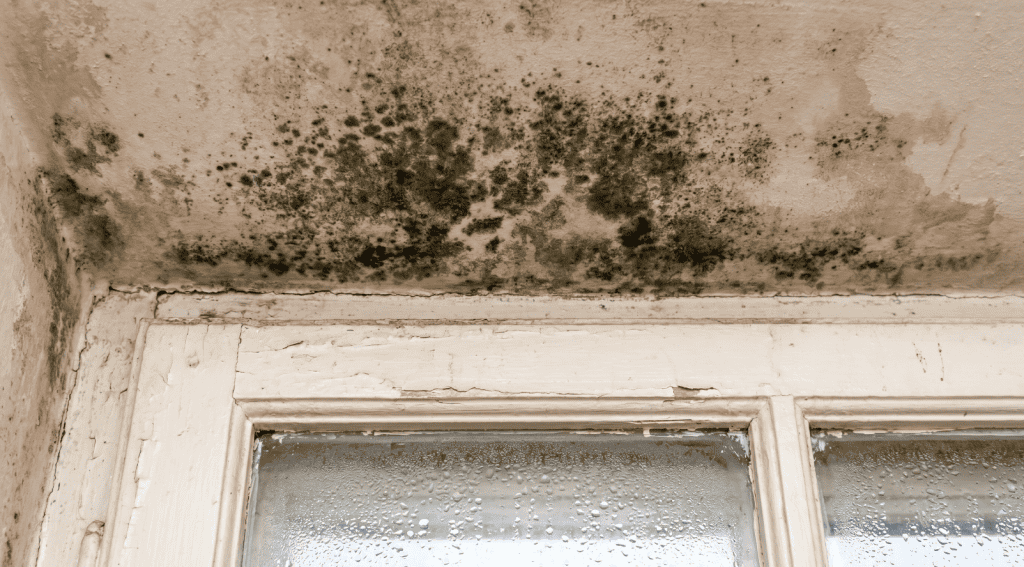
The consequences appear first as cold spots on the internal surface of a window frame or the wall directly around it.
Cold surfaces cause water vapour in the indoor air to condense when surface temperatures drop below dew point.
Over time, condensation and mould follow, and persistent wetting leads to lasting wall damage and, in serious cases, affects the masonry itself.

Where thermal bridging occurs around windows and doors
Thermal bridging occurs at several points in a typical window fitting. Not all of them are visible from inside the room.
The frame-to-wall junction
The point where the frame meets the wall is where bridging around windows most commonly happens. When a window sits in a cavity wall, the frame typically spans the gap between the inner and external leaf.
If that gap isn’t properly insulated and sealed, heat flows along the frame edge and out through the wall. Poorly fitted frames leave gaps that create direct pathways for heat to escape, which accounts for a significant proportion of the energy loss in older window installations.
Window reveals
The reveal is the wall surface visible between the window frame and the room, the inward return of the wall around the opening. Reveals are often left untreated when a window is replaced, particularly on a quick fit.
Without an insulation board (PIR is commonly used here) applied to the reveal surface, the external masonry conducts heat directly through to the exterior. Cold reveals are where condensation and mould growth first appear, usually at the corners and along the reveal edges during colder months.
The frame material itself
Frame material determines how much conduction occurs through the frame structure. Materials with different thermal properties behave very differently here.
Aluminium conducts heat readily. Its high thermal conductivity means a metal frame becomes a thermal bridge between the interior and exterior unless it incorporates an engineered thermal break.
Thermal break technology in these frames uses a section of low-conductivity material (typically glass-reinforced nylon) to interrupt the heat flow across the frame profile. Without it, the metal profile creates a direct pathway between interior and exterior temperatures.
uPVC doesn’t conduct heat in the same way. Its inherently low thermal conductivity means the frame itself contributes far less to overall heat loss. Timber sits between the two but requires ongoing maintenance to remain an effective insulator as it ages.

The glass-to-spacer edge is another point worth noting.
Conventional spacer bars between the glass panes conduct heat at the glazing perimeter, and warm-edge spacer composites reduce heat loss at that point in a well-specified sealed unit.
How window materials affect thermal bridging
The choice of frame material affects the overall U value of the finished window.
Glass is the largest factor, but the frame carries roughly 20 to 30% of the total window area, so its thermal properties feed directly into the overall result.
Aluminium and other conductive materials conduct heat more readily than uPVC.
Without a thermal break, the frame becomes a direct energy loss pathway between the warm internal temperature and the cold external face. The engineered thermal break addresses this but adds cost and complexity to the frame construction.
uPVC naturally resists heat transfer at the material level.
Our Advanced 70+ profile adds further resistance through a multi-chamber design that slows heat transfer across the frame section. No separate thermal break component is required to reach A-rated performance.
For the most exposed positions, including properties built or retrofitted to passive house standards, our triple glazed uPVC windows provide a high-performance specification that reduces heat loss through the frame and glass combined, with overall U values as low as 0.8 W/m²K.
How to prevent thermal bridging around window frames
Preventing thermal bridging improves the energy efficiency of the whole opening, because heat flowing through the frame edge bypasses the glass specification entirely. The solution involves both the right frame and the right fitting approach.
Choosing a well-specified window won’t eliminate bridging if the reveal is left bare and the gap at the frame perimeter is sealed with foam alone.
Getting both right reduces heat loss at every point in the window opening.
Insulate the reveal and seal around the frame
The easiest time to install proper reveal insulation is during a window replacement. An insulation layer at the reveal creates a continuous thermal envelope around the window opening. PIR board applied to the reveal surface before plastering prevents the wall from becoming a cooler surface that attracts condensation.
The joint between the outer edge of the frame and the wall opening should be filled with foam and finished with an appropriate sealant.
A builder or installer who misses this step leaves a gap at the frame perimeter that acts as a direct pathway for heat to transfer out of the building, regardless of how well the window itself performs.
With over 38 years of trusted window installation experience, you can trust The Advanced Group with your expert window installations.
Specify the right frame for the property
The right frame specification helps reduce heat loss at the structure level before fitting even begins.
Our Advanced 70+ uPVC profile achieves overall U values as low as 0.8 W/m²K in triple glazed configurations, which cuts heat transfer through both the glass and the frame combined.
The right specification also cuts heating costs and energy bills noticeably over a full season, particularly in older properties where replacing windows with properly treated reveals makes a measurable difference from the first winter onwards.
What happens when thermal bridging is left untreated
Cold spots appear first, where the surface around the window frame is cooler than the indoor air temperature and moisture in the room condenses on contact with the colder surface.
Black mould follows as condensation persists, typically building at the window reveals and the inner corners of the frame surround. Left untreated, recurring water collects in the wall cavity and behind the plasterwork.
Damp leads to structural damage over time: to plasterwork, to any timber elements within the wall, and in prolonged cases to the masonry around the opening.
In older properties this pattern is common where windows were fitted without adequate attention to the frame edge and reveals. Replacing the window without correcting the fitting approach repeats the same result.
Your thermal bridging questions answered
What is a thermal bridge in simple terms?
A thermal bridge is a point where heat passes from the warm interior of a building to the cold exterior more easily than through the surrounding insulation. Around window frames, thermal bridging occurs most commonly at the frame-to-wall connection, across window reveals, and through conductive materials in some frame types.
Does uPVC have thermal bridging?
uPVC naturally conducts less heat than metal frame alternatives, so uPVC frames create far less thermal bridging. The main risk with any window fitting is at the point where the frame meets the wall opening. Properly insulated reveals and a sealed frame perimeter address this and reduce heat loss at that point.
What is a thermal break in a window frame?
A thermal break is a section of low-conductivity material inserted into a frame profile to interrupt the heat pathway through the frame. In metal frames, the break is an engineered component that interrupts the conductive section. In uPVC, the material’s inherent properties provide the same function without a separate insert.
Correctly installed uPVC windows across Scotland
Cold spots and mould around window frames are as much a fitting problem as a product problem. The frame specification matters, but so does how the reveal is treated and the frame edge sealed to create a warmer, drier result over time.
Our uPVC windows use the Advanced 70+ profile with low-E glass and argon gas fill, and our full range of styles. From casement windows, tilt-and-turn, top-hung, and French styles carry A-rated WER as standard.
All our products are backed by a 15-year guarantee covering the sealed glass unit, frames, hardware, and workmanship. We’ve been supplying and fitting windows throughout Scotland since 1988.
Learn more about our products and range today in Edinburgh by calling 0131 370 0444, or request a free quote online. We’ll visit your property and talk through the right window specification for your home.
