


The Difference Between Aluminium and uPVC Bifold Doors – Advice from Glasgow Bifold Door Professionals
Aluminium is a metal.
It’s incredibly strong relative to its weight, which is why aluminium frames can be made thinner than uPVC while still carrying the same load. The result is slim sightlines and more glass area per panel.
uPVC is a polymer (polyvinyl chloride). It’s a much poorer conductor of heat and cold than aluminium, which makes it naturally insulating without needing additional components in the frame.
Both materials are used for bi-fold doors that fold and slide along a top track, both come in a range of colours, and both offer configurations from two panels up to larger openings.
The difference between aluminium and uPVC bifold doors is not in how they fold.
It’s in how they handle heat, cost, and weathering over time.
Thermal Efficiency: Aluminium vs uPVC
Aluminium and uPVC handle thermal performance differently, but modern versions of both can deliver excellent energy efficiency.
Aluminium conducts heat readily, which historically made it a poorer insulator than uPVC.
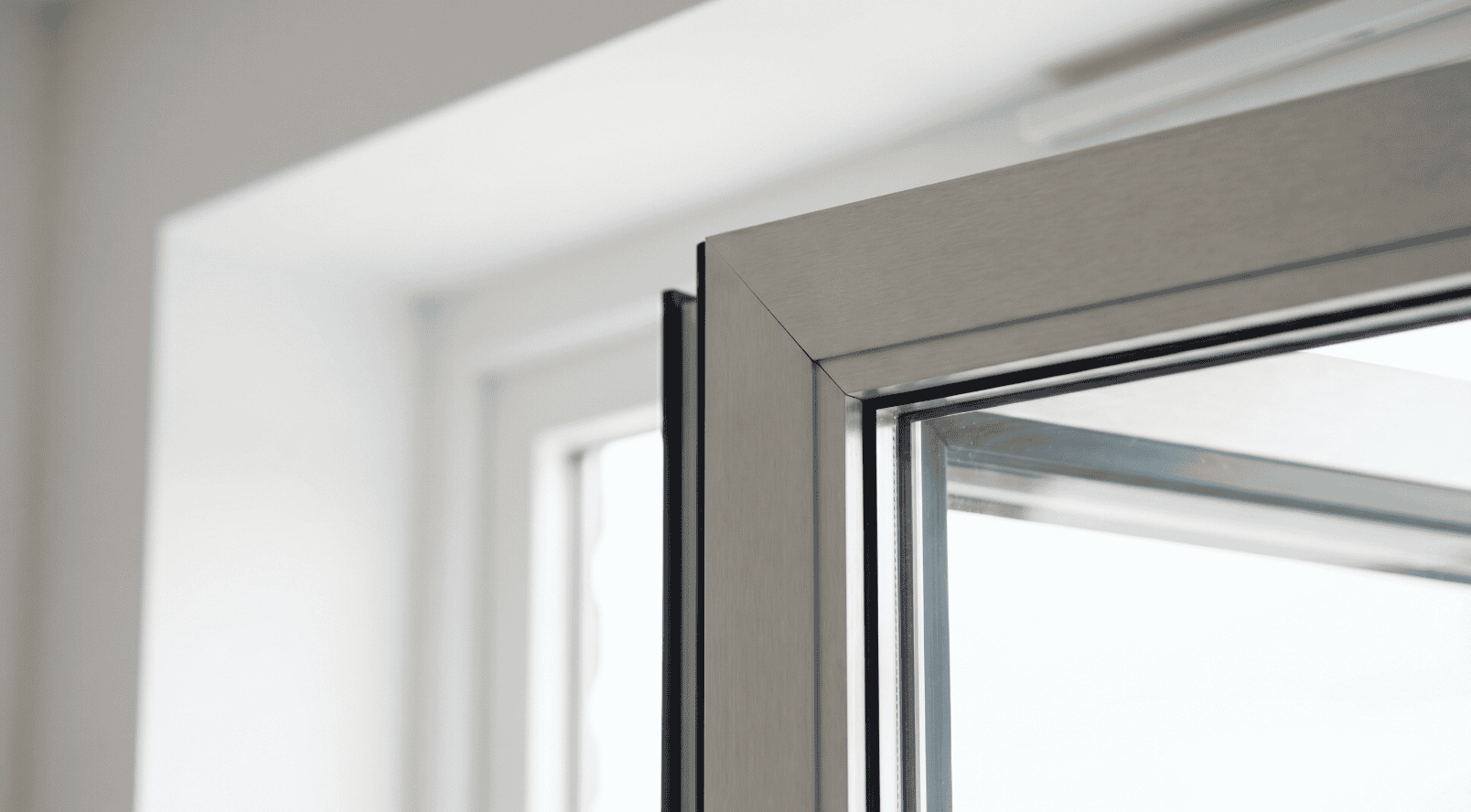
Modern aluminium bi-fold doors address this with a thermal break, a layer of insulating material, typically polyamide, built into the frame to interrupt the heat transfer path.
This innovation has transformed aluminium’s thermal performance, and today’s aluminium bi-fold doors meet or exceed building regulations with ease.
uPVC takes a different approach.
As a naturally poor conductor of heat, uPVC doesn’t require a separate thermal break. The material itself provides insulation.
A multi-chambered profile adds further resistance to heat loss, making uPVC an inherently efficient option without additional components.
Both materials are capable of delivering strong thermal performance. The difference lies in how they get there.
Durability and Weather Conditions
Aluminium is extremely durable.
It doesn’t rot, rust, or corrode in normal weather conditions, and a powder-coated aluminium surface is highly resistant to scratching and UV degradation.
Aluminium bifold doors fitted correctly should last for decades without structural issues.
uPVC is highly durable too.
It doesn’t rot or corrode, and modern uPVC is UV-stabilised to prevent the yellowing that older uPVC installations could develop over time. A well-made uPVC bifold door handles Scottish rain, frost, and wind without deteriorating.
One practical difference: powder-coated aluminium can chip or scratch through to the bare metal beneath. uPVC colour runs through the material, so surface marks are less visible and there’s no contrasting substrate underneath.
Both materials resist corrosion, but they respond to surface damage differently.
Slim Sightlines and Colour Options
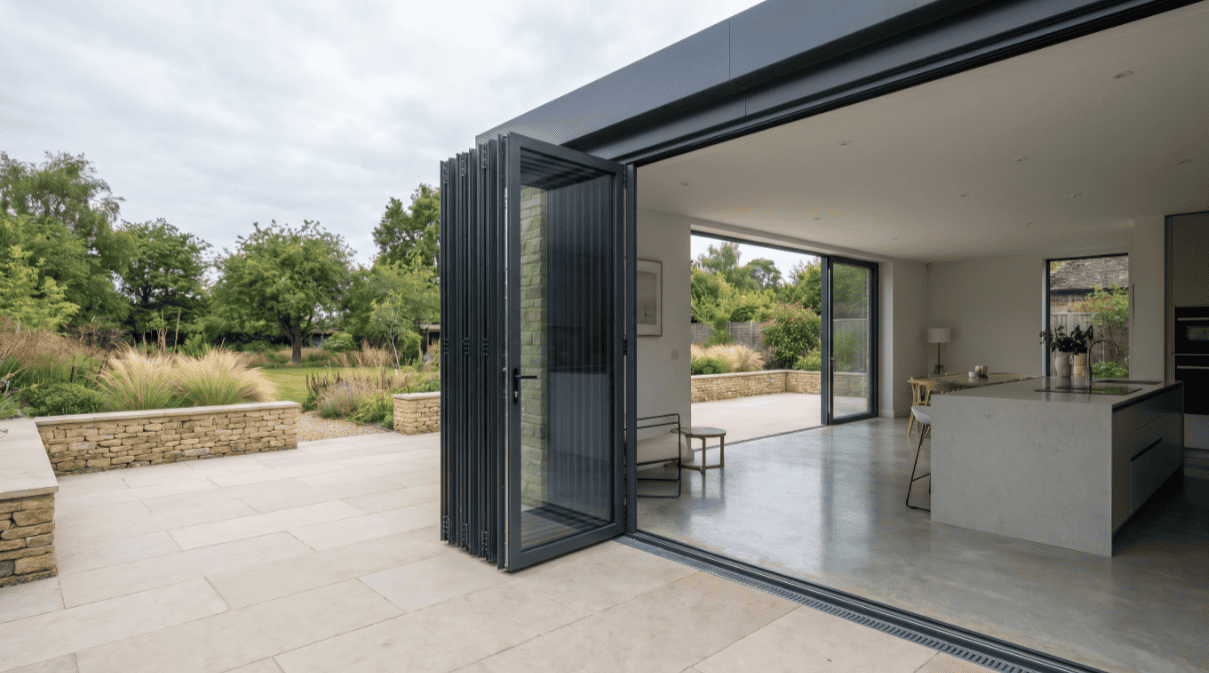
Slim sightlines are a genuine benefit of aluminium bifold doors.
Because aluminium is stronger than uPVC as a structural material, aluminium frames can be made significantly thinner while still being strong enough for large, heavy glazed panels.
More frame to aluminium means more glass.
uPVC frames tend to be wider.
For most domestic bifold door installations this isn’t a significant issue, but if very slim sightlines are a priority for the design of the space, aluminium is the better choice for that specific requirement.
On colour, aluminium doors have a wider powder-coated range. Aluminium can be powder-coated to almost any RAL colour.
uPVC bifold doors come in a good range of options including white, anthracite grey, and wood-effect finishes, but the colour selection is slightly more limited compared to aluminium.
Both materials allow natural light to flow through the glazed panels when closed, and both fully open to remove the frame from the line of sight entirely.
Are Aluminium Bifold Doors Better Than uPVC?
For sightline slimness and the widest colour palette, aluminium bifold doors are better. There’s no uPVC equivalent to the very slimmest aluminium frame profiles available on the market.
For thermal insulation without a separate thermal break, value for money, and ease of maintenance over time, uPVC bifold doors perform well and come at a lower cost than aluminium bifold doors.
Aluminium is often specified on architect-led projects, commercial builds, and high-spec extensions where the premium look is part of the brief.
For residential installations where the priority is warmth, energy efficiency, and low ongoing maintenance, uPVC delivers what most Scottish homeowners actually need from their bifold doors.
Which is better entirely is based on your own priorities.
Bifold Doors from The Advanced Group
We supply and install both uPVC and aluminium bifold doors across Central Scotland.
Both materials are available in a range of configurations and colours, and all installations carry a 15 year guarantee from professional installers.
If you’re still deciding between aluminium or uPVC bifold doors, our Glasgow showroom is the place to visit! Here you can see the frame profiles side by side before committing.
We’ll measure the opening, confirm the right configuration for the aperture, and give you clear quotes on both materials so you can compare the cost and specification directly.
Call our Glasgow team today on 01355 271 223 to find out more.
