


Most burglaries in the UK happen through ground floor windows and doors. Older windows with single-point locks are particularly vulnerable.
Modern windows are built with security in mind from the ground up, but the features that keep your home safe aren’t always obvious from the outside.
Here’s what actually goes into a secure window, how each feature works, and what to look for if you’re upgrading.
Multi-point locking systems explained by Glasgow double glazing professionals
The single biggest improvement in window security over the past twenty years is the move from single-point locks to multi-point locking.
Older windows typically locked at one point on the handle side, which meant a burglar only had to overcome one latch to open the window.
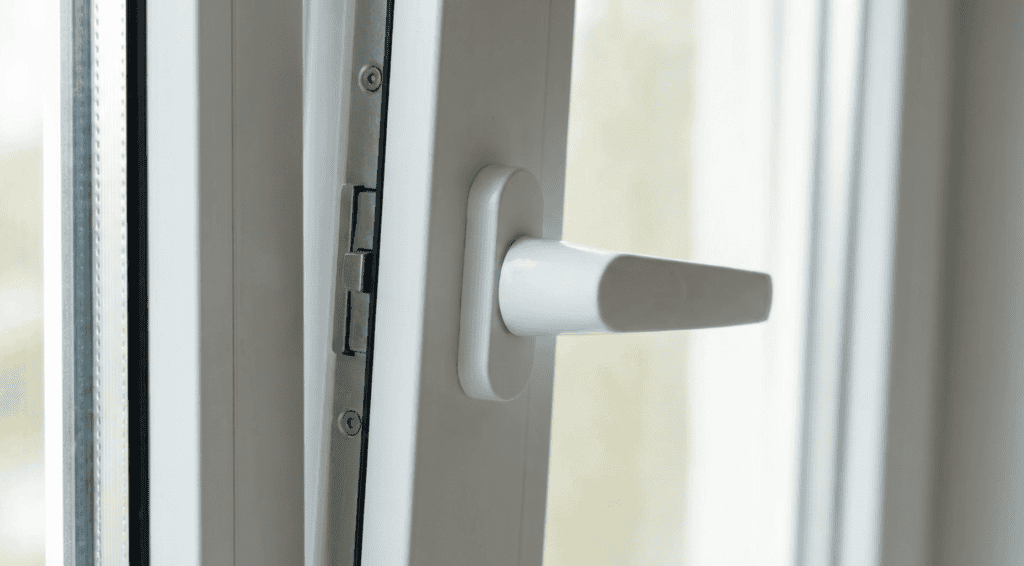
Modern uPVC windows use multi-point locking mechanisms that engage at several positions around the frame when you turn the handle. A typical casement window locks at two, three, or even four points along the opening edge.
This difference is significant.
With multi-point locking, forcing the window open at one point just puts more stress on the other lock points rather than opening the sash. An intruder would need to break through multiple locks simultaneously, which is extremely difficult without making enough noise to attract attention.

Hinge protection and anti-lift devices
A strong lock on the handle side doesn’t help if someone can lift the window off its hinges from the other side. Older windows were vulnerable to this because the hinge pins could be accessed and knocked out from outside.
Modern security hinges solve this in two ways. First, the hinge design itself is stronger, with interlocking components that can’t be separated when the window is closed. Second, anti-lift blocks or hinge protectors are built into the frame.
These are small metal studs or hooks that slot into corresponding holes on the opposite side when the window closes. Even if someone managed to remove the hinge entirely, these protectors hold the sash in the frame and prevent it from being lifted out.
Laminated glass versus toughened glass
The glazing itself is a security feature, and the type of glass matters. There are two main options beyond standard float glass: toughened glass and laminated glass.
Toughened glass
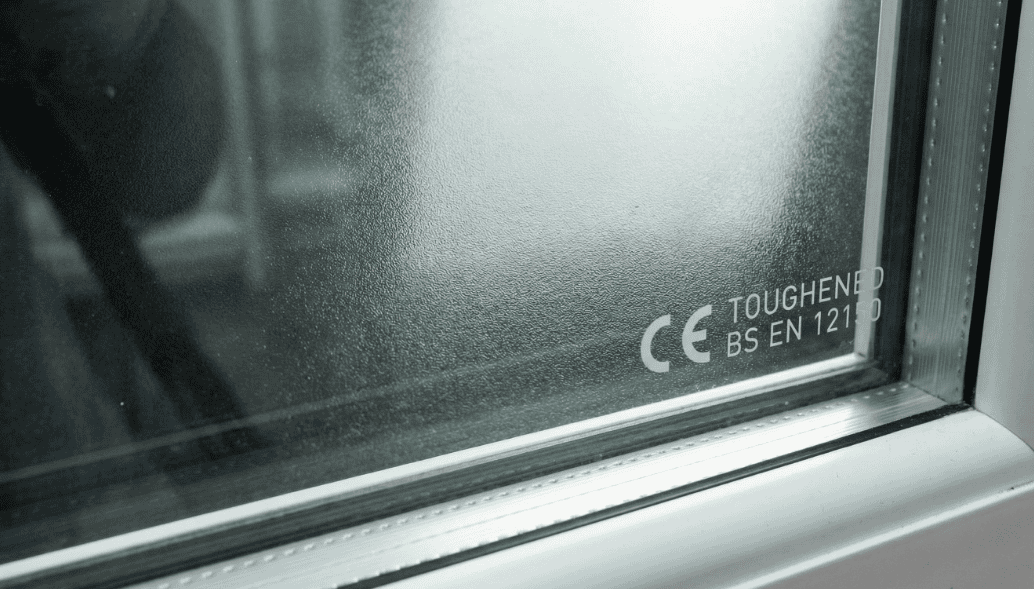
Toughened glass is heat-treated to be around four to five times stronger than standard glass.
When it does break, it shatters into small, relatively harmless granules rather than sharp shards. It’s harder to break through, but once it goes, the entire pane collapses and the opening is clear.
Laminated glass
Laminated glass takes a different approach.
It’s made from two layers of glass bonded to a tough plastic interlayer (usually PVB). When struck, the glass cracks but the pieces stay attached to the interlayer, holding the pane together even after multiple impacts.
For window security, laminated glass is the stronger option because an intruder can’t quickly create an opening to reach through. The glass cracks but doesn’t fall away, so they’d need considerable time and effort to tear through it.
That delay is usually enough to make them give up or get caught.
We fit laminated glass as an upgrade option on ground floor and accessible windows, where the security risk is highest. Upper floor windows are less vulnerable and standard toughened glass is normally sufficient.
Window security and uPVC frames
uPVC frames contribute to window security in ways that aren’t immediately obvious.
The material is tough and rigid, reinforced internally with galvanised steel, which makes the frame very difficult to lever or prise apart.
Older wooden frames could be chiselled or forced with a crowbar because the wood gave way around the lock. uPVC doesn’t behave that way. The frame resists deformation, so the locks and hinges stay aligned and functional even under force.
The steel reinforcement inside a uPVC frame also anchors the locking hardware more securely than screws into wood or aluminium alone. The lock keeps and hinge receivers are fixed into the steel core, so they can’t be pulled out by levering.
Restrictor stays for child safety and ventilation
Window restrictors serve a dual purpose.
They stop children from opening a window wide enough to fall through, and they limit the opening size so an intruder can’t squeeze in while the window is on the vent position.
Modern restrictors allow the window to open about 100mm for ventilation, which lets air circulate but isn’t wide enough for a person to fit through. An adult can override the restrictor from inside to open the window fully, but it can’t be released from outside.
These are standard on all our window installations and are a building regulations requirement on windows above ground floor level. They’re a simple feature, but they address two concerns at once without compromising the window’s function.

Key-locking handles
Most modern uPVC windows come with locking handles as standard. You turn the handle to engage the multi-point locks, then lock the handle itself with a key so it can’t be turned from outside even if the glass is broken.
This matters because one of the most common break-in methods is to crack a small hole in the glass near the handle, reach through, and turn it. A key-locking handle defeats this approach entirely, because the handle won’t move without the key even if the intruder can reach it.
Keep the key somewhere accessible to everyone in the household but away from the window itself. A hook on the wall nearby or in a drawer works well. Don’t leave it in the lock, as that defeats the purpose.
Security glazing beads
The glazing bead is the strip that holds the glass unit in the frame.
On older windows, glazing beads were fitted on the outside, which meant a burglar could pop them out with a flat screwdriver and remove the glass without breaking it at all.
All modern uPVC windows use internal glazing beads, fitted from the inside of the room. There’s no way to remove them from the outside, so the glass can’t be taken out quietly. It’s one of those features that nobody notices until you learn how older windows were compromised.
How secure are your current windows?
If your windows were installed more than fifteen years ago, they probably lack several of the security features described above. Single-point locks, external glazing beads, and basic hinge designs were all standard at the time.
You don’t necessarily need to replace every window in the house to improve security.
Ground floor windows and any windows accessible from a flat roof or an outbuilding are the priority. Upper floor windows are lower risk, though locking handles are still worth having on all of them.
At The Advanced Group, we take safety seriously.
All our windows come with mult-point locking, internal glazing beads, security hinges, locking handles, and child safety restrictors as standard.
We also offer laminated and toughened glass across our window range, while continuing to reduce the environmental impact of our products by using frames made largely from recycled materials.
For more information on our services, call us today on 01355 271 223 (Glasgow) or 0131 370 0444 (Edinburgh) for your free quote or home survey.
