


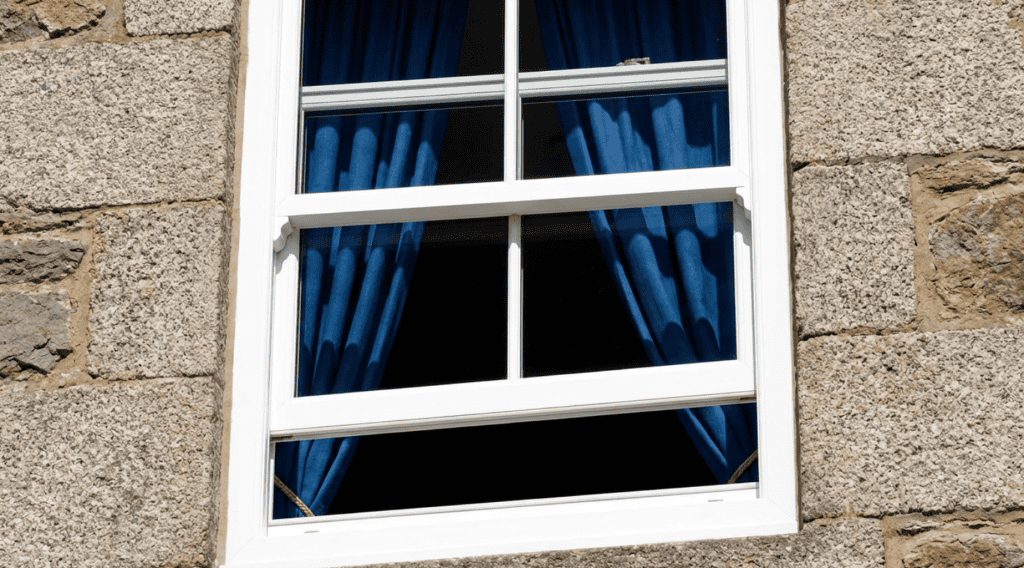
What starts as a handle that’s a bit tight usually ends with a window you can’t open or close at all.
Most stiffness in uPVC windows comes down to one of a handful of issues.
Some of these you can fix yourself with a screwdriver and ten minutes. Others need professional help.
This step-by-step guide walks you through the common causes, shows you how to fix a window that’s stiff or jammed, and tells you when to call for professional assistance instead of forcing something that could break.
Why uPVC Windows Become Stiff or Jammed – By Double Glazing Edinburgh Experts
uPVC window frames themselves rarely cause stiffness. The plastic doesn’t warp or swell the way timber does.
When a uPVC window becomes stiff to open or hard to close, the cause is almost always in the moving parts: the hinges, the handle, the espagnolette (espag) locking bar, or the friction stays that control how the sash moves.
Here are the most common window problems that cause stiffness or jamming.
Worn or Seized Friction Hinges
Friction hinges are the metal arms that control how a casement window opens and closes.
They provide enough resistance to hold the window open at any angle while still allowing smooth movement when you push or pull the sash.
Over time, the friction hinge mechanism wears, the lubricant dries out, and the hinge either becomes too stiff (the window is hard to open) or too loose (the window won’t stay open at all).
If the window hinge has seized completely, you’ll feel the handle turn but the sash won’t move, or it will only open a few centimetres before jamming.
Seized hinges are common on windows that don’t get opened regularly, because the lubricant sits in one position and dries to a sticky residue. Windows in spare bedrooms and loft rooms are the worst offenders.
Misaligned or Stiff Locking Mechanism
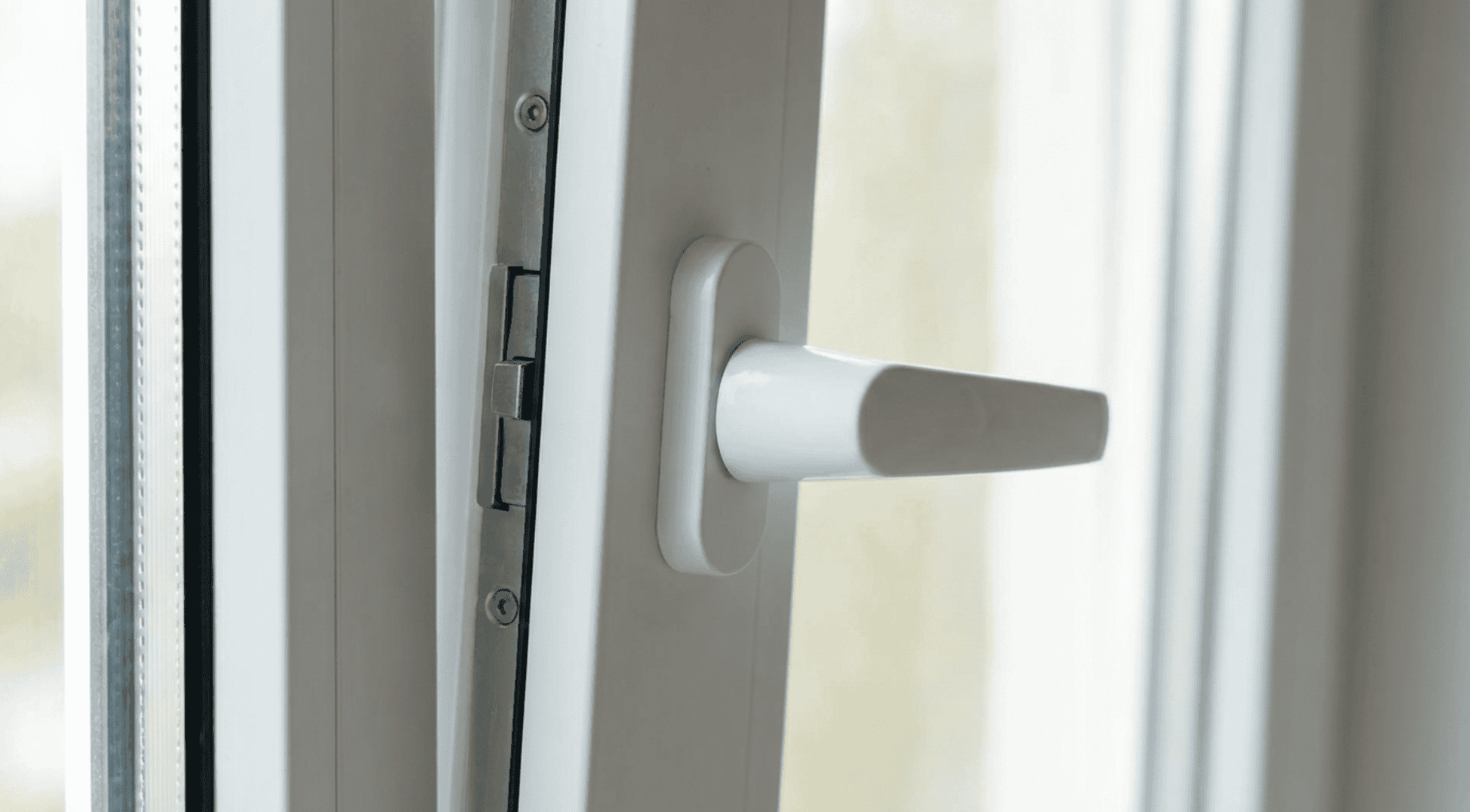
The locking mechanism on a uPVC window is a metal bar (the espag bar) that runs up the side of the sash and engages with lock keeps mounted in the window frame.
When you turn the handle, the espag bar moves up or down and the locking points slot into the keeps, pulling the sash tight against the seal around the window.
If the sash has dropped slightly (which happens over time as hinges wear), the locking points and keeps fall out of alignment.
The handle locks into place but the window doesn’t close properly, or the handle becomes extremely stiff because the espag bar is trying to force misaligned components together.
Misalignment is one of the most common causes of a window handle that’s stiff or jammed, and it’s usually fixable by adjusting the hinge position rather than replacing anything.
Handle Issues
The window handle itself can cause problems.
The spindle (the square metal bar inside the handle that connects to the gearbox in the sash) can wear down or become loose over time. A worn spindle means the handle turns without fully engaging the locking mechanism, and handle locks may not latch correctly.
The gearbox (the mechanism inside the sash that the spindle drives) can also seize or strip, particularly on older windows where the internal parts have corroded.
If the handle spins freely without any resistance, the spindle or gearbox likely needs replacing.
If the handle is stiff to turn, the gearbox may be partially seized, or the espag bar is catching because of misalignment.
Stiff or jammed handles are the second most common repair call we see after hinge problems, and they’re usually fixable without replacing the whole window.
But before attempting anything. Make sure to know this.
Never try to prise a jammed handle open with force. You’ll strip the gearbox and turn a simple repair into a bigger job.
Dirt and Debris in the Frame
Dirt, grit, cobwebs, and old paint flakes accumulate in the track where the sash sits, in the drainage channels, and around the moving parts of the hinge and lock.
Over years, this debris creates friction that makes the window progressively harder to open and close. A good clean around the window frame can solve the problem entirely in some cases.
How to Fix Stiff Windows: Quick Fixes You Can Try at Home
Clean the Window Track and Moving Parts
Open the window as far as it will go and clean the window track, the hinge arms, and the seal around the window with a damp cloth.
Remove any visible debris from the channels where the sash sits.
Use an old toothbrush to get into the corners and around the hinge pivots. Wipe everything dry afterwards.

Lubricate the Hinges and Locking Points
Apply a silicone-based lubricant to the hinge pivot points, the espag bar, and the locking points where the bar meets the keeps.
Work the handle back and forth a few times to distribute the lubricant through the moving parts. Most stiffness caused by dried-out lubrication will ease noticeably after this.
If you have WD40 to hand and nothing else, use it as a first step to free a seized mechanism, but follow up with a proper silicone-based spray for lasting lubrication.
WD40 is good for loosening corroded parts but it evaporates within weeks and leaves the metal unprotected.

Adjust the Friction Stays
Friction stays have a small adjustment screw that controls the tension.
Using a screwdriver, you can tighten the screws to increase resistance or loosen them to reduce stiffness. The screw is usually on the side of the friction stay arm, near the hinge pivot.
Adjust the friction in small increments and test the window after each turn.
Check and Tighten the Hinge Screws
Hinges are fixed to the frame and the sash with screws that can work loose over time, especially on windows that get opened and closed frequently.
Loose hinge screws cause the sash to drop, which leads to misalignment with the lock keeps and makes closing the window difficult.
Tighten the screws on both the top and bottom hinges, then test whether the window closes more smoothly.
When to Call for Professional Window Repairs
If the quick fixes above don’t solve the problem, or if you can identify the problem but don’t feel confident taking the window apart, it’s time to call a professional.
Window repairs on specific window types involve more complex hardware than a standard casement, and getting it wrong can make the problem worse or leave the window insecure.
Call a professional if:
- The gearbox inside the sash has failed and the handle turns without engaging the lock
- The hinge arms are visibly bent, cracked, or corroded and need replacing
- The window has dropped significantly and the sash no longer fits the frame properly
- You can see daylight or feel a draught around the window even when it’s closed and locked
- The double glazed sealed unit has failed (misted between the panes), because the added weight of the glass may be contributing to hinge strain
- The window is a tilt and turn type with a complex multi-point locking mechanism that you’re not confident adjusting
- If your uPVC or aluminum frame is warped or bent.
When Repair Won’t Fix It and You Need Replacing
Sometimes a stiff window is telling you that the window itself is at the end of its life.
If the white uPVC frame has yellowed and become brittle, if the hinges have been replaced before and the screw holes in the frame are stripped, or if the sealed unit has failed and the window is more than 15 to 20 years old, repair may cost more than it’s worth.
At that point, new windows are the better option.
Modern uPVC window frames are more thermally efficient, more secure, and easier to maintain than anything made fifteen or twenty years ago.
Our replacement windows use multi-point locking, energy efficient double or triple glazing, and friction stays that are designed for smooth movement and long life from day one.
If you’re spending more time fighting with stiff windows than enjoying the rooms they’re in, it might be time to replace broken or worn-out windows rather than patching them up again.
At The Advanced Group, we can tell you honestly whether your window is repairable or if it is time for a replacement. Simply give our friendly team a call today and we will guide you through your options.
